Morrissey once sang "There's more to life than books, you know / but not much more..." --- In an attempt to investigate this provocative hypothesis, I give you the unofficial blog for PGRs in the School of Arts and Media, University of Salford, and beyond. News / updates / images etc... please get in touch!
Sunday, 21 June 2015
Tuesday, 2 June 2015
GradProg talks Weds 3 June: Manchester & Porto Alegre Music Scenes // Metaphysics of the Drone's Eye in the Sky
Wednesday 3rd June 2015
Room 3.17 MCUK. All welcome!
External Speaker: Dr Fabricio Silveira (International Visiting Researcher from Unisinos, Brazil); (3.30-4.30)
Mapping Underground Popular Music Scenes in Manchester and Porto Alegre
Drawing on fieldwork conducted as part of the CAPES/Science without Borders project, “Creative Industries, Cities and Popular Music Scenes,” as well as his own sabbatical project in Manchester, Dr. Silveira will present his research into mapping underground music scenes, primarily in Manchester, and how cartographic and media archaeological methodologies can be used to enhance popular music and creative industries research.
Dr Fabricio Silveira is a Brazilian researcher into popular music and contemporary media based at Unisinos, Rio Grande do Sul, Brazil. He has numerous publications on popular music scenes including the recent monograph Instantaneous Ruptures: Entering and Leaving Pop Music. He is one of the leading researchers on the Science without Borders Special Visiting Researcher project in collaboration with Dr. Michael Goddard.
External Speakers: Dr Dean Lockwood and Dr Rob Coley (4.30-5.30)
Dream of the Drone
Our illustrated talk begins by diagramming an oneiric Lincolnshire in which puzzle pieces of the drone enigma are gathered and condensed. In preparation for World War 3, we commence with a flying lesson in Kirton-on-Lindsey before journeying on to RAF Tealby Moor, in the quantum environs of which we will map a confluence of magic, mediation, flight and warfare. We are constructing our own ‘Perturbative Adjacent Field’, but it will not be complete until we conclude the expedition four miles south of Lincoln, at RAF Waddington. Finally, in Waddington’s drone room, we can at last be ‘diverted’ into new realms of desire. The drone is the ‘signature device of the present moment’ (Noys) and a metaphysics of the drone, foregrounding divine powers of search and destroy, has captured the imaginations of many. What is at stake in the dream of the drone? Through what vectors is the drone exerting its transformative impact upon philosophy, media, aesthetics, social and cultural theory and how might these disciplines exploit the fabulatory function of the drone?
Room 3.17 MCUK. All welcome!
External Speaker: Dr Fabricio Silveira (International Visiting Researcher from Unisinos, Brazil); (3.30-4.30)
Mapping Underground Popular Music Scenes in Manchester and Porto Alegre
Drawing on fieldwork conducted as part of the CAPES/Science without Borders project, “Creative Industries, Cities and Popular Music Scenes,” as well as his own sabbatical project in Manchester, Dr. Silveira will present his research into mapping underground music scenes, primarily in Manchester, and how cartographic and media archaeological methodologies can be used to enhance popular music and creative industries research.
Dr Fabricio Silveira is a Brazilian researcher into popular music and contemporary media based at Unisinos, Rio Grande do Sul, Brazil. He has numerous publications on popular music scenes including the recent monograph Instantaneous Ruptures: Entering and Leaving Pop Music. He is one of the leading researchers on the Science without Borders Special Visiting Researcher project in collaboration with Dr. Michael Goddard.
External Speakers: Dr Dean Lockwood and Dr Rob Coley (4.30-5.30)
Dream of the Drone
Our illustrated talk begins by diagramming an oneiric Lincolnshire in which puzzle pieces of the drone enigma are gathered and condensed. In preparation for World War 3, we commence with a flying lesson in Kirton-on-Lindsey before journeying on to RAF Tealby Moor, in the quantum environs of which we will map a confluence of magic, mediation, flight and warfare. We are constructing our own ‘Perturbative Adjacent Field’, but it will not be complete until we conclude the expedition four miles south of Lincoln, at RAF Waddington. Finally, in Waddington’s drone room, we can at last be ‘diverted’ into new realms of desire. The drone is the ‘signature device of the present moment’ (Noys) and a metaphysics of the drone, foregrounding divine powers of search and destroy, has captured the imaginations of many. What is at stake in the dream of the drone? Through what vectors is the drone exerting its transformative impact upon philosophy, media, aesthetics, social and cultural theory and how might these disciplines exploit the fabulatory function of the drone?
Cahal McLaughlin and Catherine Wheatley talks
Archiving voices from the Troubles, prisons as sites for recollection and re-enactment; moral retribution and the bind of the confessional, landscapes as imprisonning. Our thanks to Cahal McLaughlin and Catherine Wheatley for their fantatsic talks on media matters Irish.
Sunday, 17 May 2015
GradProg talks this Weds (20/5): Prison as Conflict Memory Archive / "Calvary", Faith and Doubt
External Speaker: Prof Cahal McLaughlin (Creative Arts, Queens University of Belfast)
3.30-4.30, Room 2.20. MediaCityUK, University of Salford campus.
The Prisons Memory Archive: Representing Memories from a Conflict
The Prisons Memory Archive is investigating ways that narratives of a conflicted past are negotiated in a contested present in Ireland. The Haas (2013), Eames-Bradley (2009), and the Bloomfield (1998) Reports all recommended storytelling as a way of engaging with this issue that is both politically and psychically sensitive. Given the government’s failed attempts at established an official process for addressing the legacy of the past, there are a number of community and academic initiatives that have taken up this task. The Prisons Memory Archive is one such project, whose aim is to research the possibilities of engaging with the story of the ‘other’ in a society that is emerging from decades of political violence. The Prisons Memory Archive (PMA) filmed interviews back inside the prisons with those who passed through the Maze and Long Kesh Prison and Armagh Gaol, which were both touchstone and tinderbox during the 30 years of violent conflict in the North of Ireland. Using protocols of co-ownership, inclusivity and life-story telling, we filmed a range of participants including prison staff, prisoners, visitors, teachers, chaplains and probation officers.
Cahal McLaughlin is chair of Film Studies at Queens University Belfast. He is a documentary filmmaker and director of the Prisons Memory Archive. His latest films are We Were There (2014) on the role of women in the Maze and Long Kesh Prison, and We Never Give Up II (2012) on reparations in South Africa. His publications include Recording Memories from Political Conflict: a filmmakers journey (2010: Intellect).
External Speaker: Catherine Wheatley (Kings College London)
4.35-5.30, Room 2.20. MediaCityUK, University of Salford campus.
John McDonagh's 'Calvary' a Place Between Faith and Uncertainty
Following the last days of Catholic priest Father James (Brendan Gleeson), John Michael McDonagh’sCalvary contemplates the place of religion in contemporary Ireland, a country hit badly by the economic collapse and struggling with revelations of sexual abuse by priests and its institutional covering-up. McDonagh describes the film thus: “The mise en scène indebted to Andrew Wyeth. The philosophy to Jean Améry. The transcendental style inspired by Robert Bresson.” Yet while the film’s style and subject matter place it firmly in a cinematic tradition which starts with Carl Dreyer and moves through Bresson to, in different ways, Lars von Trier and Terrence Malick, the inclusion of dark humour reframes its consideration of faith and uncertainty. In my talk, I want to pay particular attention to how the director negotiates between satire and the serious possibility of grace in order to create a gap in which a genuine ambivalence towards the film’s subject matter can arise. We can connect this gap, this space which is inhabited by both Father James and by the film’s spectators to Gillian Rose’s concept of “the broken middle”, a place suspended between immanence and transcendence (Rose, 1992). This is precisely the position in which Father James finds himself. But this, says Rose, is where the sacred is to be found: in the space between religion and secularity; the personal and the institutional; faith and cynicism. Finally, I will briefly consider the film’s reception amongst critics and audiences, with whom Calvary has seen surprising success. I want to ask whether this critical success comes in spite or because of the fact that the film is, to quote Guardian critic Peter Bradshaw, “far less anti-clerical than one might expect” (Bradshaw, 2014).
Catherine Wheatley is Lecturer in Film Studies at King’s College London. She has published books on the films of Michael Haneke, Film and Ethics, and French Film in transit. Catherine is a regular contributor to Sight and Sound Magazine, and is currently writing a monograph on iterations of Christianity in contemporary European Cinema.
3.30-4.30, Room 2.20. MediaCityUK, University of Salford campus.
The Prisons Memory Archive: Representing Memories from a Conflict
The Prisons Memory Archive is investigating ways that narratives of a conflicted past are negotiated in a contested present in Ireland. The Haas (2013), Eames-Bradley (2009), and the Bloomfield (1998) Reports all recommended storytelling as a way of engaging with this issue that is both politically and psychically sensitive. Given the government’s failed attempts at established an official process for addressing the legacy of the past, there are a number of community and academic initiatives that have taken up this task. The Prisons Memory Archive is one such project, whose aim is to research the possibilities of engaging with the story of the ‘other’ in a society that is emerging from decades of political violence. The Prisons Memory Archive (PMA) filmed interviews back inside the prisons with those who passed through the Maze and Long Kesh Prison and Armagh Gaol, which were both touchstone and tinderbox during the 30 years of violent conflict in the North of Ireland. Using protocols of co-ownership, inclusivity and life-story telling, we filmed a range of participants including prison staff, prisoners, visitors, teachers, chaplains and probation officers.Cahal McLaughlin is chair of Film Studies at Queens University Belfast. He is a documentary filmmaker and director of the Prisons Memory Archive. His latest films are We Were There (2014) on the role of women in the Maze and Long Kesh Prison, and We Never Give Up II (2012) on reparations in South Africa. His publications include Recording Memories from Political Conflict: a filmmakers journey (2010: Intellect).
External Speaker: Catherine Wheatley (Kings College London)
4.35-5.30, Room 2.20. MediaCityUK, University of Salford campus.
John McDonagh's 'Calvary' a Place Between Faith and Uncertainty
Following the last days of Catholic priest Father James (Brendan Gleeson), John Michael McDonagh’sCalvary contemplates the place of religion in contemporary Ireland, a country hit badly by the economic collapse and struggling with revelations of sexual abuse by priests and its institutional covering-up. McDonagh describes the film thus: “The mise en scène indebted to Andrew Wyeth. The philosophy to Jean Améry. The transcendental style inspired by Robert Bresson.” Yet while the film’s style and subject matter place it firmly in a cinematic tradition which starts with Carl Dreyer and moves through Bresson to, in different ways, Lars von Trier and Terrence Malick, the inclusion of dark humour reframes its consideration of faith and uncertainty. In my talk, I want to pay particular attention to how the director negotiates between satire and the serious possibility of grace in order to create a gap in which a genuine ambivalence towards the film’s subject matter can arise. We can connect this gap, this space which is inhabited by both Father James and by the film’s spectators to Gillian Rose’s concept of “the broken middle”, a place suspended between immanence and transcendence (Rose, 1992). This is precisely the position in which Father James finds himself. But this, says Rose, is where the sacred is to be found: in the space between religion and secularity; the personal and the institutional; faith and cynicism. Finally, I will briefly consider the film’s reception amongst critics and audiences, with whom Calvary has seen surprising success. I want to ask whether this critical success comes in spite or because of the fact that the film is, to quote Guardian critic Peter Bradshaw, “far less anti-clerical than one might expect” (Bradshaw, 2014).Catherine Wheatley is Lecturer in Film Studies at King’s College London. She has published books on the films of Michael Haneke, Film and Ethics, and French Film in transit. Catherine is a regular contributor to Sight and Sound Magazine, and is currently writing a monograph on iterations of Christianity in contemporary European Cinema.
Wednesday, 13 May 2015
"Awake in your Dreams"
Our thanks to Shemin B Nair for presenting his most recent (and award-winning) short film to the Graduate Programme. We look forward to a screening of the next one!
Monday, 11 May 2015
Grad Prog (13 May): Public Broadcasting to Internet Protocol / Screening "Awake In Your Dreams"
MedicCity UK, Room 3.17/3.18
3.30-4.30pm
Dr Marko Ala-Fossi (University of
Tampere, Finland)
‘The Short Future of Public
Broadcasting: Replacing Digital Terrestrial TV with Internet Protocol?’
According to recent European
estimates, the life expectancy of broadcasting as a free-to-air television
platform may not be more than 15 years. Both the BBC and YLE, the public service
media companies in the UK and Finland – as well as the UK regulator Ofcom – have
independently reached this conclusion in recent reports about the future of
news, media distribution and digital terrestrial television (DTT). Although
broadcasting is expected to be necessary at least until 2030, all three
organizations assume that after that time DTT can be switched off and – under
certain conditions – completely replaced with IP-based solutions for PSM
delivery.
This is not the first time a new
distribution technology has been expected to replace earlier one(s). Television
was expected to replace radio, FM to replace AM, DAB to replace FM, etc. But so
far the telegraph is the only communication technology that has been completely
displaced by newer systems. In the light of retrospective analysis in this
paper, the idea of IPTV taking over DTT is a more sophisticated version of this
“black box fallacy”. Predictions of the early demise of the DTT are also
contradictory. For example, in the UK Ofcom continues to support DAB digital
radio broadcasting. The Finnish case is perhaps more straightforward as the
spectrum for digital radio is used in clearing the 700 MHz band from DTT for
mobile broadband use. But it is evident that in both countries the expectations
of the growth of the mobile media ecosystem and economic profits are part of the
force driving the latest version of an old idea.
Using a theoretical perspective
combining new institutionalism and political economy of communication, this
paper examines potential and existing problems in replacing one sort of
socio-technological system, i.e. broadcasting, with a completely different one.
There are crucial technical difficulties and normative questions also arise.
Would it be possible to secure universal access to public service content on a
common platform? Would new gatekeepers emerge with access to IP-related data on
users’ identities and locations? How might data flows be tracked and managed?
And how secure might such data remain?
430-530pm, Shemin Nair (Salford PhD
sutdent)
Film screening and Q and A
Awake in Your
Dreams
Laura needs a
redemption from her haunting dreams.
Synopsis
Laura experiences
her kid’s death in her dreams at the very same time it happens. But she can’t
respond as she is in a state called as sleep paralysis. And she
experiences a series of hallucinations and dreams. Louis tries to rescue her.
The film has a surreal form and is non descriptive and non narrative.
Thursday, 7 May 2015
Alexei Penzin
Our thanks to Alexei Penzin for his talk on sleep: new territories of capitalist real subsumption, sleep as interrupted continuum, the Grundrisse re-read for Neo-Liberal times
Tuesday, 5 May 2015
Grad Prog 6/5: Social Media and PGR Profiles / "Sleep, Vigilance and Modern Power"
Wednesday 6th May 2015
Room 2.20 MediaCityUK (University of Salford building; please sign in at reception for the Graduate Programme)
3.30 PM - 4.30PM
Internal Speaker: Dr Gillian James (University of Salford)
Making the Most of Social Media to Aid Your Research Profile
You may be used to using social media to stay in touch with friends. However, it is also a very powerful tool for making connections with others researching in your field, whether your research is academic or practice-based. This session looks at optimising the use of:
Twitter
Facebook
Linkedin
We explore the most useful aspect of each of these platforms and look at several scenarios and establish which platform is the most appropriate tool for each one. In addition we look at setting up a blog and maintaining it in an effective way, possibly converting it into a full-blown web site. Most people would probably not want to use all of these tools, at least at first. The session will help you establish what is right for you.
4.30PM - 5.30PM
External Speaker: Dr Alexei Penzin (What is to be done? Collective/Univerity of Wolverhampton)
The Capitalist Continuum: Sleep, Vigilance and Modern Power
Departing from criticisms addressed to the Jonathan Crary’s recent book 24/7: Late Capitalism and the Ends of Sleep (Verso, 2013) and referring to some other works in emergent field of critical sleep studies, I would like to present my own research project, suggesting an account of sleep in the contemporary or “terminal” capitalism. Its essential feature, in my view, is the uninterrupted or permanently “wakeful” continuity of production, exchange, consumption, communication and control. Marx stated already in Capital, vol. 1: “Capitalist production … drives, by its inherent nature, towards the appropriation of labor throughout the whole of the 24 hours in the day”. Maybe, instead of asking desperate though understandable question “when and how, finally, will capitalism end? The Left critique would better investigate this monstrous continuity itself. So the key questions for this account would be: what would be a genealogy of this obsessive continuity of contemporary capitalism? Is sleep just the last “natural barrier”–the term Marx used in theGrundrisse–in front of complete colonization of society by the incessant forms of life, shaped by 24/7 drive of capitalist production? How can the figure of sleeper be related to the constitution of a resisting subjectivity? Do we need a specific ontology to conceptualize and crack the oppressive continuity?
Alexei Penzin is Reader at the Faculty of Arts of the University of Wolverhampton (UK), and Research Fellow at the Institute of Philosophy, Russian Academy of Sciences, Moscow. His major
fields of interest are philosophical anthropology, Marxism, Soviet and post-Soviet studies, and the philosophy of art. He lectures widely on these topics and has participated in many international research projects, seminars, and symposia. Penzin has written numerous articles including the essay Rex Exsomnis: Sleep and Subjectivity in Capitalist Modernity (Hatje Cantz Verlag, 2012). Alexei is a member of the group Chto Delat (What is to Be Done?), which works in the space between theory, art, and political activism. Penzin is also a member of editorial boards of the journal Stasis (Saint-Petersburg) and the Moscow Art Magazine. He currently lives and works between London and Moscow.
Room 2.20 MediaCityUK (University of Salford building; please sign in at reception for the Graduate Programme)
3.30 PM - 4.30PM
Internal Speaker: Dr Gillian James (University of Salford)
Making the Most of Social Media to Aid Your Research Profile
You may be used to using social media to stay in touch with friends. However, it is also a very powerful tool for making connections with others researching in your field, whether your research is academic or practice-based. This session looks at optimising the use of:
We explore the most useful aspect of each of these platforms and look at several scenarios and establish which platform is the most appropriate tool for each one. In addition we look at setting up a blog and maintaining it in an effective way, possibly converting it into a full-blown web site. Most people would probably not want to use all of these tools, at least at first. The session will help you establish what is right for you.
4.30PM - 5.30PM
External Speaker: Dr Alexei Penzin (What is to be done? Collective/Univerity of Wolverhampton)
The Capitalist Continuum: Sleep, Vigilance and Modern Power
Departing from criticisms addressed to the Jonathan Crary’s recent book 24/7: Late Capitalism and the Ends of Sleep (Verso, 2013) and referring to some other works in emergent field of critical sleep studies, I would like to present my own research project, suggesting an account of sleep in the contemporary or “terminal” capitalism. Its essential feature, in my view, is the uninterrupted or permanently “wakeful” continuity of production, exchange, consumption, communication and control. Marx stated already in Capital, vol. 1: “Capitalist production … drives, by its inherent nature, towards the appropriation of labor throughout the whole of the 24 hours in the day”. Maybe, instead of asking desperate though understandable question “when and how, finally, will capitalism end? The Left critique would better investigate this monstrous continuity itself. So the key questions for this account would be: what would be a genealogy of this obsessive continuity of contemporary capitalism? Is sleep just the last “natural barrier”–the term Marx used in theGrundrisse–in front of complete colonization of society by the incessant forms of life, shaped by 24/7 drive of capitalist production? How can the figure of sleeper be related to the constitution of a resisting subjectivity? Do we need a specific ontology to conceptualize and crack the oppressive continuity?
Alexei Penzin is Reader at the Faculty of Arts of the University of Wolverhampton (UK), and Research Fellow at the Institute of Philosophy, Russian Academy of Sciences, Moscow. His major
fields of interest are philosophical anthropology, Marxism, Soviet and post-Soviet studies, and the philosophy of art. He lectures widely on these topics and has participated in many international research projects, seminars, and symposia. Penzin has written numerous articles including the essay Rex Exsomnis: Sleep and Subjectivity in Capitalist Modernity (Hatje Cantz Verlag, 2012). Alexei is a member of the group Chto Delat (What is to Be Done?), which works in the space between theory, art, and political activism. Penzin is also a member of editorial boards of the journal Stasis (Saint-Petersburg) and the Moscow Art Magazine. He currently lives and works between London and Moscow.
Tuesday, 28 April 2015
PGR Research via Monday's Scrapbook event (6 May)
A installation performance taking place on
Wednesday 6th May at Media City between 7-9pm
The installation performance is a work in progress, opening up 20 weeks of
laboratory work, during which we have been looking at how everyday objects, such
as paper and string, can be reformed, reimagined and recreated through physical
tasks. The work itself is devised from a ensemble practice creating
contemporary, physical, task-based performance. I have attached the publicity
document for more information.
Friday, 13 March 2015
GradProg talks Weds 18/3: Google Glasses / BBC and Popular Music
Two talks on the Graduate Programme this coming Weds (18 March):
Salford's Prof Andy Miah on Wearable Technology. 3.30-4.30, MediaCity, Salford University Campus Room 3.17.
and Prof Tim Wall (Birmingham City University) on the history of the BBC's engagement with popular music. 4.35 - 5.35, MediaCity, Salford University Campus Room 3.17.
All welcome, and drinks in the Dock Bar afterwards!
Internal Speaker: Prof Andy Miah (Chair in Science Communication and Digital media, University of Salford)
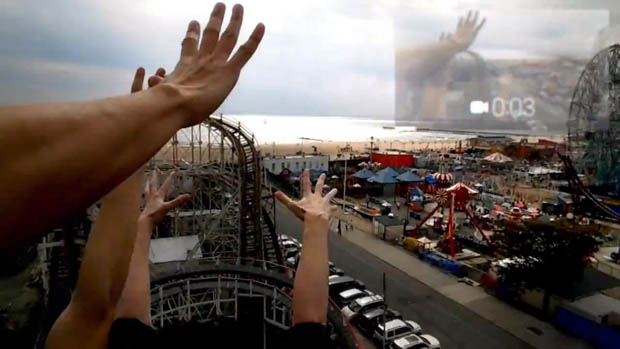
OK Glass? The Aspirations and Anxieties of the Google Glass Generation
This discussion explores online discourses about Google Glass, over a period
where the devices were not yet available. It examines the aspirations and
anxieties of the developers and the perspectives of (potential) user groups, so
as to develop an understanding of how people imagine the impact of wearable
technologies on society. The research draws on videos made by various parties,
which show Google Glass in use, but which also parody the discourse surround its
transformative potential. It also the content within the Google Glass lens
itself - the lens within the lens - providing an additional layer of content and
narrative about Glass. Analyses also take place on content related to the Google
Glass promotional campaign #ifihadglass, teasing out the ways in which the use
of Glass was imagined. The conclusions speak to the imagined, transformative
potential of Glass specifically and wearable technologies generally, which may
set a new research agenda for the next ten years in studies of digital
culture.
External Speaker: Prof Tim Wall (Professor of Radio and Popular Music Studies, Birmingham City University)
Popular Music and the BBC

This presentation will focus on three moments in the history of the BBC’s relationship with popular music. I’ll examine the way that jazz entered broadcasts of the early BBC in the 1920s and 30s, and especially the way the new corporation struggled to deal with the idea that jazz was a sophisticated metropolitan form of entertainment, while others saw it as a radical new form of music that provided a strong sense of a new cultural identity to its listeners. It is interesting to note that the BBC was still struggling with these ideas in the late 1960s when the BBC completely reorganised its radio broadcasting into Radios One to Four. This is often seen as the moment in which the BBC accepted the challenge of the sea-based pilots but, as I will show, it is far more complex than this, and these endeavours resulted in a radical, if compromised, attempt to rethink popular music. I’ll complete the analysis with a discussion of the Later…. and X Factor. As twenty-first century popular music television, these programmes represent very different institutional takes on discourses of popular music and the way it can be mediated for domestic consumption. Rather ambitiously, I’ll use very different approaches to understand each of these moments, framing the 1920s by focusing on the (then) new wired and wireless technologies, grappling with the 1960s through ideas of institutionalised culture, and opening up today’s BBC using Barthesian ideas of mythology. Here I’m consciously seeking to study each period using a framework that is usually used to study other moments. In doing so I hope to open up some fundamental questions about what we think we know about music and the BBC, and about method and insight. This should be an interesting intellectual provocation for anyone studying media and/or music culture.
Tim Wall is Professor of Radio and Popular Music Studies and Associate Dean for Research in the Faculty of Arts, Design and Media at Birmingham City University. He researches into the production and consumption cultures around popular music and radio, and work on knowledge exchange projects with music and radio organisations and the wider creative industries. Most recently he has been applying insights from music to activism and citizen journalism in the Arab region. His recent publications have included the second edition of his book Studying Popular Music Culture, and articles on music radio online, punk fanzines, the transistor radio, personal music listening, popular music on television, television music histories, jazz collectives, Duke Ellington on the radio, The X Factor and jazz on the BBC 1922 to 1955.
Salford's Prof Andy Miah on Wearable Technology. 3.30-4.30, MediaCity, Salford University Campus Room 3.17.
and Prof Tim Wall (Birmingham City University) on the history of the BBC's engagement with popular music. 4.35 - 5.35, MediaCity, Salford University Campus Room 3.17.
All welcome, and drinks in the Dock Bar afterwards!
Internal Speaker: Prof Andy Miah (Chair in Science Communication and Digital media, University of Salford)
OK Glass? The Aspirations and Anxieties of the Google Glass Generation
External Speaker: Prof Tim Wall (Professor of Radio and Popular Music Studies, Birmingham City University)
Popular Music and the BBC

This presentation will focus on three moments in the history of the BBC’s relationship with popular music. I’ll examine the way that jazz entered broadcasts of the early BBC in the 1920s and 30s, and especially the way the new corporation struggled to deal with the idea that jazz was a sophisticated metropolitan form of entertainment, while others saw it as a radical new form of music that provided a strong sense of a new cultural identity to its listeners. It is interesting to note that the BBC was still struggling with these ideas in the late 1960s when the BBC completely reorganised its radio broadcasting into Radios One to Four. This is often seen as the moment in which the BBC accepted the challenge of the sea-based pilots but, as I will show, it is far more complex than this, and these endeavours resulted in a radical, if compromised, attempt to rethink popular music. I’ll complete the analysis with a discussion of the Later…. and X Factor. As twenty-first century popular music television, these programmes represent very different institutional takes on discourses of popular music and the way it can be mediated for domestic consumption. Rather ambitiously, I’ll use very different approaches to understand each of these moments, framing the 1920s by focusing on the (then) new wired and wireless technologies, grappling with the 1960s through ideas of institutionalised culture, and opening up today’s BBC using Barthesian ideas of mythology. Here I’m consciously seeking to study each period using a framework that is usually used to study other moments. In doing so I hope to open up some fundamental questions about what we think we know about music and the BBC, and about method and insight. This should be an interesting intellectual provocation for anyone studying media and/or music culture.
Tim Wall is Professor of Radio and Popular Music Studies and Associate Dean for Research in the Faculty of Arts, Design and Media at Birmingham City University. He researches into the production and consumption cultures around popular music and radio, and work on knowledge exchange projects with music and radio organisations and the wider creative industries. Most recently he has been applying insights from music to activism and citizen journalism in the Arab region. His recent publications have included the second edition of his book Studying Popular Music Culture, and articles on music radio online, punk fanzines, the transistor radio, personal music listening, popular music on television, television music histories, jazz collectives, Duke Ellington on the radio, The X Factor and jazz on the BBC 1922 to 1955.
Monday, 9 March 2015
Salford symposium: Melancholy Empire (16/4)
Salford symposium on contemporary British and Irish literature
at Salford, you may register here: https://www.eventbrite.co.uk/e/melancholy-empire-tickets-15873282415
The programme will be posted on this event page two weeks before the conference, which is on 16th April. Current confirmed paper titles, including the keynote lectures, can be found here: https://www.academia.edu/10241383/Melancholy_Empire
GradProg talks 11/3: Qs of Practice-Based Research // Zero Budget Film-making
11th of March,
MediaCityUK, University of Salford Campus, Room: 3.17
Internal
Speakers: Rosie Miller and Jonathan Carson (3.30-4.30)
Combining
practice based and non-practice based research
This session examines strategies for students interested in combining
practiced based and non-practice based research. It will also discuss the value
of this combining especially in relation to reflexive thinking and the
development of research work and a research profile. The session will be led by
collaborative artists Carson & Miller.
External
Speaker: Dr William Brown (Surrey Roehampton) (4.30 - 5.30)
Zero Budget
Filmmaking: Why It Matters (and Why I Do It)
In this talk, I will discuss various forms of zero- to low-budget
filmmaking from across the globe, including Uruguay, China, Iran, the
Philippines, South Africa and the USA. I shall contend that zero budget
filmmaking is, in the contemporary era, enabled by digital technology – and that
the technology, in conjunction with the low budget, often leads to formal
innovation that makes of this kind of filmmaking a vibrant and important form.
Nonetheless, distribution remains a key issue for such films and filmmakers, in
spite of the utopian promise of online distribution and exhibition sites such as
YouTube and Vimeo. What is more, while often supportive of such films, film
festivals are forced increasingly to be risk-averse in their film choices.
Perhaps this means that academia is the realm where zero-budget filmmaking might
thrive. Indeed, I query that the academic sphere is the best hope for
zero-budget filmmakers, among whom I include myself: cheap enough to be formally
adventurous, too cheap for festivals to risk losing an audience for.
William Brown
is Senior Lecturer in Film at the University of Roehampton, London. He is the
author of Supercinema: Film-Philosophy for the Digital Age (Berghahn,
2013) and Global Digital Cinema: Cinema and the Multitude (Berghahn,
forthcoming). He is the co-author, with Dina Iordanova and Leshu Torchin, of
Moving People, Moving Images: Cinema and Trafficking in the New Europe
(St Andrews Film Studies, 2010) and the co-editor, with David Martin-Jones,
of Deleuze and Film (Edinburgh University Press, 2012). He has also
directed several zero- to low-budget films, including En Attendant Godard
(2009), Afterimages (2010) and Common Ground (2012). He hopefully
will also finish Ur: The End of Civilization in 90 Tableaux (2013) by the
time he gives this talk.Monday, 2 March 2015
Graduation Day
One of our recent PhD graduates (now lecturing at Bournemouth) reflects on the big day, and the essential support and friendship, when it comes to getting there, from fellow PhD students:
http://blackbritishacademics.co.uk/2014/07/18/academic-success-against-the-odds-the-amazing-dr-ndlovu/
"The academics tackling everyday sexism in university life"
Guardian article on Oxford-centred initiative: http://www.theguardian.com/education/2015/feb/24/sexism-women-in-university-academics-feminism
Wednesday, 25 February 2015
"The Raven on the Jetty" screening
Our thanks to Erik for screening his new film, The Raven on the Jetty, this afternoon, and for the compelling introduction and rich discussion: Bressonian aesthetics in the Lake District, the intimacy of soundscapes, narrative after causality, snow and sunshine and psychological change, and learning from child actors.
Friday, 20 February 2015
Times Higher: "Me and my PhD supervisor: tales of love and loathing"
When a PhD supervision session constitutes just another blocked-out hour in a besieged diary, it can be all too easy to forget that it could make an impression that stays with the student for the rest of their research career.
We asked five academics for their recollections of the PhD supervision they received, and the way it had informed their own approach to tutoring. Three had enjoyed excellent supervision that had deeply influenced their own practice. But two had not. One recalls exchanges with their tutor characterised by yawns and silences, while another was treated with a “cutting harshness”, valuable only as an exemplar of how not to conduct yourself.
Full: http://www.timeshighereducation.co.uk/story.aspx?storyCode=2012205
We asked five academics for their recollections of the PhD supervision they received, and the way it had informed their own approach to tutoring. Three had enjoyed excellent supervision that had deeply influenced their own practice. But two had not. One recalls exchanges with their tutor characterised by yawns and silences, while another was treated with a “cutting harshness”, valuable only as an exemplar of how not to conduct yourself.
Full: http://www.timeshighereducation.co.uk/story.aspx?storyCode=2012205
Grad Prog at MediaCity 25/2: "The Raven on the Jetty"
Professor Erik Knudsen will be presenting his film The Raven on the
Jetty (which won the 2014 Madrid International Film Festival Jury Award) and discussing perspectives on cinematic narrative.
The session will last from 3.30-5.30 in The Egg, MediaCityUK, University of Salford campus.
Perspectives on Cinematic Narrative: The Raven
on the Jetty
Professor Erik Knudsen, will give a presentation entitled
“Perspectives on Cinematic Narrative: exploring through creative practice the
transcendental narrative as an alternative to dominant narrative structures in
film”. Erik will screen and discuss his latest feature film, The Raven
on the Jetty, in the context of its research aims and objectives. The
format for this meeting will be a brief introduction highlighting some of the
questions and problems Erik is exploring around cinematic narrative, screening
of The Raven on the Jetty concluding with a short
Q & A session.
Thursday, 12 February 2015
PGR Programme
Our thanks to Prof Noha Mellor for her very well attended talk the other day: new paradigms of news gatekeeping, the "social space", and the challenges and conceits of non-aligned editorial positions.
Saturday, 7 February 2015
Salford GradProg talk this Weds: "The Egyptian Dream: On Egyptian National Identity and the Uprisings"
11th February, Room 2.19, MediaCityUK
External
Speaker: Prof Noha Mellor (3.30-4.30)
The
Egyptian Dream: On Egyptian national identity and the uprisings
After being celebrated by Barack Obama as “the power of human
dignity”, the 2011-Egyptian revolution later turned into violent outbreaks and
ongoing socio-ideological fragmentation. In this lecture, I discuss one of the
central problems in Egypt in post-independence era, namely the inability of its
leaders to construct a coherent and solid ideology that could appeal and unite
the majority of Egyptians. Indeed, there exist rhetorical and social strategies
of inclusion and exclusion, thereby dividing society into those who are regarded
as true representatives of Egypt versus others who may constitute an economic,
political or social burden. I’ll discuss the role of religion, education,
language and culture in constructing this sense of Egyptian-ness and how the
issue of identity has been used in political discourse.
Professor Noha
Mellor’s main research interests are Arab journalism, mediated religion and
media and gender. Besides her academic experience, she has previous professional
experience in journalism as News Producer both for the Danish Broadcasting and
the BBC World Service, and contributed to international media outlets such as
the New York Times and Financial Times. She contributes her
expertise in Arab journalism to current trans-national initiatives to promote
peace such as the UN Alliance of Civilizations, and was also the EUROMED and
Media representative at the EU Ministerial Meeting on Culture, 30 May 2008,
Athens. Books include Modern Arab Journalism (Edinburgh), Arab Media
Industries (Polity) and, forthcoming, Cyber Islam and Social Media and
the Pan-Arab Newsroom.
Internal
Speaker: Dr Benjamin Halligan (4.45-5.45)
Viva
Survival Guide
This session will
deal in detail with the Viva: what to expect, how to prepare, how to defend your
work, and the possible outcomes from the Viva.
Salford conference: Social Media and Feminism at MediaCityUK
All info and booking (free), available here: http://www.salford.ac.uk/news/social-media-and-feminism
Tuesday, 20 January 2015
Yuri Landman DIY Instrument Building Workshops
6th-8th February 2015
Experimental inventor of musical instruments, Yuri Landman, is visiting Islington Mill to deliver a series of workshops demonstrating his fascinating craft. Attendees will have the opportunity to build an instrument and participate in a performance using it. This is a fantastic opportunity to gain insight into the work of one of the most creative minds in instrument design. The day after the workshops Yuri Landman will play his musical compositions with the group of builders and create an ensemble performance. The participants play two musical compositions, starting in a minimal structure one by one, with each introduction creating more sonic complexity and volume, resulting in a “wall of sound” crescendo comparable with the drone works of Sonic Youth or the symphonic guitar compositions of Rhys Chatham and Glenn Branca. -Fri FEB 6th - 19.00-23.00 - Electric Kalimba workshop, costs 75 Pounds.
-Sat FEB 7th - 12.00-16.00 - Home Swinger & Triochord workshop. HS costs 110 Pounds, Trio 45 Pounds.
-Sat FEB 7th - 19.00-23.00 - Wood on Foam workshop, costs 35 euro.
-Sun Feb 8th - Lecture, Solo performance, and Orchestra performance with the participants of the workshops.
People can register by mailing strateraser@gmail.com. 50% of the amounts must be paid in advance to get a confirmation for participation. More information can be found at http://www.islingtonmill.com/events.php
Saturday, 17 January 2015
Manchester University's Sexuality Summer School
Programme partially announced; updates on their blog, and registration info: https://sexualitysummerschool.wordpress.com/
Friday, 9 January 2015
Guardian: How To Survive A PhD Viva
http://www.theguardian.com/higher-education-network/2015/jan/08/how-to-survive-a-phd-viva-17-top-tips
On 14: you could always ask for a short break of course. Perhaps Guardian journalists aren't afforded such workplace niceties?
Sunday, 4 January 2015
Salford conference: “I’ll See You Again in 25 Years: The Return of Twin Peaks and Generations of Cult TV”
Call for
Papers
“I’ll
See You Again in 25 Years: The Return of Twin Peaks and Generations of
Cult TV”
A two-day international
conference.
School of Arts and Media, University
of Salford, UK
21st- - 22nd
May 2015
Confirmed keynote
speakers:
· Professor David
Lavery (Middle Tennessee State University, USA)
· Cristina Alvarez
(Barcelona based independent video artist)
· Dr Adrian Martin
(Monash University, Australia)
Proposals are invited for a two-day international conference on the
return of the popular cult television series Twin Peaks. The conference
presents a timely reconsideration of the critically acclaimed programme with the
announcement of its return to television after a twenty five year hiatus. In the
meantime, cultures of television production, circulation and viewer practices
have changed dramatically; the US cable sector in this period becoming the
primary site for a model of auteur-driven, big-budget offbeat serial drama that
Twin Peaks served as prototype for, with this trend underpinning
Showtime’s recommissioning of this series of broadcast network origin. But
alongside such transformation, the cultural prominence of this landmark
programme has endured, as the considerable enthusiasm among critics and fans for
the series’ return demonstrates.
This conference seeks to address the issue of Twin Peaks’
significant influence and lasting appeal from a number of multi-disciplinary
perspectives. We welcome proposals from scholars in the fields of
cultural studies, television studies, film studies, visual arts, popular music
studies, sound studies performance studies, digital and social media and related
disciplines.
Proposals are invited on (but not limited to) the following
topics:
Twin
Peaks and fandom
Twin
Peaks and generations of cult television
Music and sound design in Twin Peaks
Set
design and visual style
The
use and subversion of the crime and melodrama genres
Feminism and gender relations
Seriality in Twin Peaks and contemporary television
Camp
performance styles in Twin Peaks
David Lynch and televisual auteurism
Twin
Peaks and social media
Generations of quality television
Intertextuality between television, film and literature
Comic and melodramatic performance styles
Film
and television convergence
Twin
Peaks and the contemporary television industry
Deadline for abstracts:
31st January 2015
300
word abstracts plus a 100 word biography should be sent to the conference
organisers:
Kirsty Fairclough-Isaacs K.Fairclough@salford.ac.uk
Anthony Smith A.N.Smith@salford.ac.uk
Thursday, 18 December 2014
School of Arts and Media Graduate Week: Full programme
School of Arts and Media
Graduate Week Programme (2014/2015)
Monday 12 - Friday 16 January 2015
MediaCity Campus, 2nd Floor, Room 2.36
Dear Postgraduates,
Please find below the jam-packed programme for our Graduate Week,
2014/2015. Sessions cover all kinds of aspects of your PGR study, and after, as
well as presentations from current PGRs. Please pick and choose as you like ---
and please feel free to drop in and out of sessions; we like to keep the week
informal!
Look forward to seeing you there ---
Dr Benjamin Halligan
Director of Postgraduate Research, College of Arts and Social Sciences
Monday 12th January
11.00-11.20 Introduction
Prof Karl Dayson, Associate Dean
Research & Innovation
11.20 - 12.00: Prof Karl Dayson
Research Excellence Framework
2014, and the role of the Early Career Researcher
12.00-1.00 Library Workshop: Helen McEvoy
Introduction to your online and
physical library services and resources
1.00-2.00 Lunch break
2.00-3.00: You’re Hired! Applying for Academic Jobs: Prof Seamus
Simpson
and Dr Caroline Magennis
This session will discuss one
element of the what next question - applying for academic jobs: When and where
to look; how to construct an academic CV and online profile; how to make the
most your academic experience and your PhD studies; what to look (out) for in
job applications; how to survive job presentations and interviews and what
academic departments and colleagues are really looking for.
3.00-3.45 Documentary Screening 1: "The Good
Doctorate"
Planning
to a distant deadline
How "life" can get in the way
Being realistic about time and cost
Working with your supervisor
How "life" can get in the way
Being realistic about time and cost
Working with your supervisor
3.45-4.30: PowerPoint and Presentations: Dr Benjamin
Halligan
This session will consider the
“do’s” and “don’t” of using PowerPoints, for PGR progression points as well as
conference papers
4.30-5.30: Welcome for new postgraduate researchers
With Drs Michael Goddard and
Benjamin Halligan, and PGR rep Will Carruthers
Informal welcome to new PGRs -
getting to know the research environment, and each other.
Tuesday 13th January
11-12.00: Journal Rankings and Publications: Prof Karl
Dayson
12.00-1.00 PhD Survival Guide: Dr Deborah Woodman
Deborah Woodman is a research
administrator in the College of Arts & Social Sciences and has lectured in
British history for the Universities of Huddersfield and Salford. Her PhD is on
the public house in nineteenth century Manchester and Salford, graduating in
2011. Prior to her work at Salford she spent ten years at the University of
Manchester, where she undertook a number of roles in research support.
This presentation will consider
some of the issues that you may encounter when undertaking a PhD and how to
deal with them. Whether full or part-time the PhD is different to anything else
you will do, and you will face issues combining your research with employment,
family, and life in general. You may have concerns with, for instance,
finances, keeping your research on track and the pressure of meeting deadlines,
presenting your first conference paper, and coping with a viva. The
presentation will offer some practical advice that will help you cope with a
whole range of issues that may arise during your studies.
1.00 - 2.00: Lunch
2.00-245: Documentary Screening 2: Good Supervision
How supervision is organised
What support to expect
How to get the feedback you need
How disciplines differ
2.45-4.00 Viva Survival Guide: Dr Benjamin Halligan
This session will deal in detail
with the Viva: what to expect, how to prepare, how to defend your work, and the
possible outcomes from the Viva.
4.00-5.00 Your Online Profile: Dr Cristina Archetti
This session will consider the
importance of an online presence in terms of profile-raising, especially at the
point of application for academic positions.
5.00-5.45: Making Use of Freedom of Information Requests
(FOIs) for your research:
Dr Christopher J. Murphy
This session will offer a general
introduction to FOIs, including key “do’s” and “don’ts”
Wednesday 14 January 2014
11.00-12.30: Guide to Progression Points: Dr Benjamin Halligan
This session will outline the
nature of all progression points during the lifecycle of the PhD – from
Learning Agreement to IE. We will look at the forms that are required for each,
talk about the expectations of the panels that look at them, and offers tips
for smooth and timely progress. (NB: This session relates specifically to
Salford University progression points, and so is not relevant for guest from
other universities).
12.30-1.30: Lunch break
2.30 - 5.00: Training in MCUK camera equipment
Session for those intending to
use camera equipment as part of their research
Thursday 15th January
11.00-1.00 Practice-based Research: Dr Richard Talbot, Dr
Scott Thurston,.
This session will consider
methodologies for PGRs who are incorporating practice into their work. (NB: This
session is specifically for those PGRs working in humanities subjects.)
1.00-2.00 Lunch break
2.00-2.45 Documentary Screening 3: "The Good Viva"
How to
prepare
What to expect on the day
How to understand the outcome
What to expect on the day
How to understand the outcome
2.45-4.00: Field Research and Discussion: Sharon Coen
Conducting and publishing content
analytical work
Sharon Coen has research and
teaching experience in the areas of social and media psychology. Her main
interests concern the way media portray and respond to social and political
issues, and how these in turn inform public perceptions of the same issues.
This session will take you
through the key steps involved in successfully conducting and publishing
content analytical work. Starting from the development of a testable research
question to the selection and implementation of appropriate methodologies, the
assessment of validity and reliability, data analysis and interpretation, we
will discuss how to run and report content analytical work in an effective and
meaningful way.
4.00-5.00 Impact Discussion: Dr Jo Creswell
Impact: Creating a new space in
research.
• What is meant by ‘Impact’?
• What is the potential for
impact in your research?
• How might the focus on impact
help you to build networks, and reach more people through your research and
support you in your career.
5.00-6.00: PGR presentations: 1) Alex McDonagh
Building
a Digital Park: the digital recontextualisation of Towneley Park's heritage
meanings.
Through interviews and personal visits to Towneley with park users this project has aimed to use a grounded theory approach to explore the meanings associated with a public park space. The collected data has been translated into a digital format in an attempt to create a digital retelling of the participants' park experiences. Through the analysis of this digital development process, I aim to explore the ways in which digital heritage may overcome, perpetuate or provide new social barriers to the expression of cultural heritage.
Alex McDonagh is a PhD researcher in the subject of Heritage Studies at the University of Salford. He is
currently
exploring the effect of digital heritage interpretation in the context of
natural or outdoor heritage at Towneley Park, Burnley. His research interests
include heritage, digital heritage, simulations, phenomenology and archaeology.
2)
Adam Hart and Lee Jones
Lee
Jones & Laptop Ensemble: Collaborative Composition
My
research examines the benefits of using alternative approaches to jazz
composition through five musical elements: harmony, form, orchestration,
improvisation and the role of the score. This presentation will focus on the
boundaries that exist between live/recorded media and composition/improvisation
through a practical demonstration and overview of the process.
Friday 16th January
11.00-12.00 Post Doc Funding Opportunities for New
Researchers: Rob Morris
The session will look at the main
opportunities for funding and how and when to apply for them and talk about
career development for those wanting to develop a career in research in
academia.
Robert Morris from the Research
and Enterprise Division has worked in Research Management and Support for over
14 years at the University of Salford and has supported many bids into the UK
research Councils, European Union and various trusts and charities.
12.00-1.00 From Conference Participation to Publication: Dr
Michael Goddard
This session will examine one of
the most productive and straightforward ways of publishing your research--via
conference participation. Many academic conferences have specific publication
outcomes (sometimes already mentioned in the call for papers), and even when
they don't there are frequently opportunities for disseminating and publishing
your work that emerge from conference participation. This session will cover
such issues as selecting the best conference to present your work (subject
specific, postgraduate or not, connected to an association), preparing
conference abstracts, conference networking, conference organisation, revising your
abstract for publication, and the publication process. As it is impossible to
generalise, a range of examples will be presented but there will also be the
opportunity to present your own experiences and issues regarding both
conference participation and the publication process.
1.00- 1.30: Knowledge Transfer
Partnerships (KTP): Janet Morana (Partnerships
Manager)
KTP is
one of the UK's leading recruiters - If you want to apply your qualification,
start a ‘real’ job straight away and gain a professional qualification, then a
Knowledge Transfer Partnership (KTP) is what you’re looking for. You should be
inquisitive, bright and serious about getting ahead.
1.30-2.30 Lunch Break
2.30-3.30 Screening 4: “The UK Doctorate”
Critical
thinking
Independent working
The upgrade process
Culture clashes
Independent working
The upgrade process
Culture clashes
3.30-4.30: Research Excellence
Framework 2020: Prof Karl Dayson
This
session considers the results of the 2014 UK-wide assessment of research, and
looks forward to the next assessment period (2014-2019). What are the emergent
trends for the coming 5 years? How can a PGR begin to plan for entry into the
2020 assessment, and so enhance employment prospects, in terms of publications,
profile and impact?
4.30-5.00: PGR Presentation: Juan
Hiriart
Zooming In and Out of History: Using Games as Facilitators for
Micro-macro Historical Thinking and Understanding
Micro-history and Macro-history
have both evolved as separate traditions, each of them leading to different
means to deal with size, closeness and distance in historical understanding. In
spite of the differences, several authors have stressed the importance of
making connections between these two separate epistemologies, and to generate
meaningful links between the narratives of ordinary people and the general
structures and patterns of history. In this presentation, I would like to show
an exploration of how digital game technologies and procedural simulations can
be implemented and used as a mean to facilitate this type of encounters. In
order to get a better understanding of this design problem, a game prototype is
being developed. One of the main goals of this prototype is to allow players to
navigate between different points of perception and interaction, using gameplay
mechanics as a way to foster historical thinking and understanding.
5.00-5.30: Open discussion: What
does it mean to be a PhD student?
Chair:
TBA
5.30: Refreshments (Dock Bar)
Wednesday, 3 December 2014
GradProg talks, Weds 10/12: "Beyond the Utopia Moment" / "Post-Conflict Culture"
Arts & Media Graduate Programme:
Transforming Us - Beyond the Utopian Moment
Wednesday 10 December 2014 3.30pm - 4.20pm
Venue: Room 2.20, MediaCityUK
Event Type: Arts; Public Lectures
After looking at the ways in which experiential participatory theatre
opens up the potential for transformative moments of performance, I
became interested in two things: first the language we use to talk about
the transformative in performance and second,
the way processes of transformation actually work and how the
experiences we are able to generate in an artistic context map on to
wider personal and sociopolitical change. This talk will discuss the
practice based research I have been working on with choreographer
Medie Megas over the past year and a half, which explores this on a
formal level, through textual and movement based experiments with
repetition and transformation. In our work we refer to these
contrasting experiences of transformation as closed or open
systems where the closed system of transformation moves between two
well defined points and the open begins from a fixed point and works
outwards from it. This model acts as a frame for the practical research
tasks and processes during the research phase and
more recently, the creative approach to improvisation and devising we
have taken in making Transforming Me: a Bilingual Solo, Medie’s
solo performance at the Mir Festival in November. In terms of
theoretical framing, the practice we have done brings
into question the focus in performance research on the notion of the
transformative as a bounded moment. I draw on Griselda Pollock and
Bracha Ettinger in this presentation to explore how the sharing of
intense emotional experience, an ‘encounter’ within a
liminal space can open up an enduring experience of trans-subjective
transformation and how stasis, duration, repetition and latency form a
part of that.
Dr Kate Adams (University of Salford): http://www.salford.ac.uk/arts-media/arts-media-academics/kate-adams
Beyond the Past: Theoretical approaches to ‘post’-conflict culture
Wednesday 10 December 2014 4.30pm - 5.30pm
Venue: Room 2.20, MediaCityUK
Event Type: Arts; Conferences; Public Lectures
Dr Magennis is a Lecturer in Twentieth and Twenty-First Century
Literature at the University of Salford. She is a specialist in modern
and contemporary literature, with particular intellectual interests in
contemporary fiction, Irish literature, Northern Irish
cultural production and critical theory. She is the author of Sons of
Ulster: Masculinities and the Contemporary Northern Irish Novel. She
sits on the Executive Council for the British Association for Irish
Studies and on the Editorial Advisory Board for the
Irish Studies Review.
This paper seeks to complicate the ways in which trauma theory has been
readily applied to post-conflict literature and culture, with a focus on
Northern Ireland. It will examine the ways in which discourses of
conflict resolution can be complicated by attitudes
to narrative and memory in contemporary fiction and the ways in which
theoretical work on grief, affect and hope can be productively used to
discuss these texts. The aim is to explain the broad theoretical basis
for my current work on the Northern Irish novel,
so as to start conversations with colleagues and post-graduate students
engaged in work around memory, history and culture.
Subscribe to:
Posts (Atom)