Monday, 30 January 2012

Salford Postgrad Conference 2012: Call for Papers!

All postgraduate researchers are invited to take part in the University of Salford’s Postgraduate Annual Research Conference (SPARC).

This year’s conference is taking place on Wednesday 30 and Thursday 31st May 2012. It’s free to attend and a great way of developing presentation skills, sharing ideas, publicising your research to new audiences, getting feedback, and meeting researchers from other disciplines and universities.

We are inviting 250-word abstracts for a range of presentation formats. Please see the website for more details about SPARC and how to apply www.salford.ac.uk/research/sparc

The closing date for abstracts is Friday 16 March 2012

Any queries, please contact us on sparc@salford.ac.uk


We look forward to hearing from you!
Victoria (on behalf of the SPARC team)
(Dr Victoria Sheppard)

Sunday, 29 January 2012

Grad Prog talk, 1/Feb

External speaker:
Prof Jackie Stacey
Professor Stacey’s academic background is an interdisciplinary one, combining European Studies (Sussex), Women’s Studies (Kent) and Cultural Studies (Birmingham). She currently works at the University of Manchester, specializing in feminist cultural theory and its bearing upon questions of political transformation. As well as being a co-editor of two journals, Screen and Feminist Theory, her publications include Star Gazing: Female Spectators and Hollywood Cinema (1994) and Teratologies: A Cultural Study of Cancer (1997) and (as co-author with Sarah Franklin and Celia Lury) Global Nature, Global Culture (2000). She has also co-edited a number of books, including Romance Revisited with Lynne Pearce (1995), Screen Histories: A Screen Reader with Annette Kuhn (1998), Thinking Through the Skin with Sara Ahmed (2001) and Queer Screens with Sarah Street (2007).


The Uneasy Cosmopolitans of Code Unknown
Across the humanities and social sciences we are currently witnessing a move towards a renewed cosmopolitanism. In these debates, cosmopolitan ideals blend a liberal notion of ‘openness to others’ with a sense of 'worldliness' that might welcome the flow of diversity and proximity to the unfamiliar. This talk questions the celebratory tone of this renewed cosmopolitanism through a reading of Code Unknown (Michael Haneke, 2000). If the promise of the cosmopolitan project is to be found in the notion of what we might call a more ‘open sociality’, then this talk explores how Code Unknown turns the processes of spectatorship into the ethical testing ground for such a vision.


Second floor lecture theatre, Adelphi House, 4.15-5.15pm.

Building 3 on page 3 of this map: http://www.salford.ac.uk/travel/campus-map.pdf
(NB: Not Adelphi Building, and beware of Google Maps that confuses the two).

Monday, 23 January 2012

Salford celebrates LGBT History Month 2012

The University’s annual celebration of LGBT (Lesbian, Gay, Bisexual and Transgender) History Month begins on Thursday, 2 February, with a special launch event.

Staff are invited to join leading figures from the world of sport and media for a discussion on the representation of LGBT issues in contemporary sports journalism.

The guests taking part in Sports Media and Sexuality: A Panel Discussion will include basketball star Jon Amaechi, who was the first NBA player to come out; former BBC commentator and sports reporter Bob Ballard; Sarah Williams, Equality & Diversity Manager for Rugby Football League; Claire Harvey, Paralympian sitting volleyball player; Chris Noble MBE, Director Sheffield Eagles, and Dave Randles, sports journalist and Salford lecturer.

The event, which heralds the start of a programme of LGBT History Month activities at the University, takes place at the MediaCityUK campus, from 6.15pm until 8.30pm.

It will be preceded by Take Action: Make Schools Safer – a workshop for teachers, aimed at helping schools to challenge homophobic bullying, support all their young people and promote understanding across communities.

A diverse range of other activities will be happening throughout the month, including music, training sessions, a pub quiz and writing workshops.

On The Fringes, a storytelling workshop led by writer Michelle Green, will take place on Tuesday, 7 February, 12pm-2pm. It will be a unique opportunity to explore untold stories with a focus on the experience of being on the fringe of mainstream LGBT discourse.

The Lesbian and Gay Foundation will host a pub quiz at Bar Yours on Friday, 17 February, 5.30pm-7pm. From sport and entertainment to politics and history, see how much you know about the achievements and contributions made by leading LGBT figures.

On Thursday, 21 February, TREC will deliver a Transgender Equality Training session, in University House, between 2pm and 4pm.

The sessions have been developed to increase awareness and understanding of the trans-diversity strand. They provide best practice guidance and legal information through presentations, group exercised and real-life scenarios.

The LGBT History Month celebrations will come to a close on Wednesday, 29 February, with a unique performance by the Manchester Lesbian & Gay Chorus. The choir has toured internationally and won the Silver Medal in the 2009 World OutGames, in Copenhagen.

LGBT Staff Network Co-chair Holly Cruise said: “The University’s LGBT Staff Network welcomes colleagues, students and the public to help celebrate the achievements of our lesbian, gay, bisexual and transgender communities, and to explore what more we can do for members of the LGBT community, and their families, friends and colleagues.

“LGBT History Month is an inclusive event and we look forward to seeing a wide range of people at the various events.”

For more information on the events, including details on times and venues, please visit http://www.equality.salford.ac.uk/page/lgbt_2012.

Thursday, 19 January 2012

De-Nastification


Our thanks to Dr Xavier Mendik (seen here with Greg Bevan) for his fantastic talk on "Cannibal Holocaust", and for screening his new documentary on the making and reclaiming of the film.


Xavier's definitive Cult Film Reader (which includes an essay by our own Prof David Sanjek) is available here.

Join Professor Ben Light for his Professorial Inaugural Lecture

Professor Ben Light, Associate Dean of Research and Innovation in the College of Arts and Social Sciences, invites you to attend his Professorial Inaugural Lecture, Contemporary Digital Media, Gender and Sexuality, on Tuesday, 7 February, in room 2.36 from 6.30pm at MediaCityUK.
 
The lecture will draw upon his studies of Internet dating, digital gaming, social networking sites and ‘social media’ to consider the continuing importance of ‘the digital’ with respect to gender and sexuality in everyday life.
His research over the past five years has mainly focused on people’s experiences of living with a variety of digital media – particularly that which is associated with the Internet.
As well as his academic roles, Professor Light is a member of the Communication, Cultural and Media Studies Research Centre and sits on the University’s Digital Cluster Executive.
Professor light is currently working on a book entitled ‘Social Networking Practices and Everyday Lives’ which is due to be published next year by Palgrave.
If you would like to register to attend this event, please click here http://supporters.salford.ac.uk/NetCommunity/Page.aspx?pid=775&srctid=1&erid=447126 or call Paul Butlin on x55114

Digital Curation Centre Roadshow, Salford, 20-21 March

I am very pleased to tell you that Salford has been selected to host the 9th Digital Curation Centre regional roadshow on research data management, which will take place on 20th and 21st March. Professor Martin Hall has kindly agreed to give the opening address.

The programme and venue is currently being finalised, with opportunities on Day 1 to showcase related Salford initiatives. If you or your colleagues have a project that you would like to present as a case study, please let me know.

The roadshow is being organised by The Library in conjunction with the DCC, and you can now register to attend the roadshow here:

Monday, 16 January 2012

MMP Grad Programme talks: Weds 18 Jan

All sessions: second floor lecture theatre, Adelphi House
Building 3 on page 3 of this map: http://www.salford.ac.uk/travel/campus-map.pdf
(NB: Not Adelphi Building, and beware of Google Maps that confuses the two).


Internal Speaker: Mary Oliver (3.10 - 4pm)

Mary Oliver has been a performance artist for almost 30 years working across the fields of theatre, music, fine art and creative technology. For over a decade she has focussed on the creation of digital performance works and has collaborated with animators, film-makers, composers, computer programmers and most recently with a cognitive psychologist on the creation of interactive performance works that often play with the humour of the human-technological interface. Mary is Reader in Performance, Head of the Performance Research Centre and is leading the development of Digital Performance Research at the new Digital Media Performance Lab at MCUK.

“Practice as Research” Seminar
This session will be useful for anyone interested in research methods for creative practitioners. Mary's will use a number of her recent interdisciplinary performance and technology projects as case studies with which to distinguish the differences between practice and practice-as-research. She will focus on planning, writing proposals, execution (specifically working in interdisciplinary teams) documentation and dissemination of PAR


External Speaker: Dr Xavier Mendik (4.15 - 5.10)

Xavier Mendik is Director of the Cine-Excess International Film Festival and DVD label at Brunel University, from where he also runs the Cult Film Archive and research centre. He has written extensively on cult and horror traditions, and some of his publications in this area include The Cult Film Reader (2008), Alternative Europe: Eurotrash and Exploitation Cinema Since 1945 (2004), Shocking Cinema of the Seventies (2002), Underground USA: Filmmaking Beyond the Hollywood Canon (2002) and Dario Argento’s Tenebrae (2000). Xavier has recently completed 100 Cult Films (with Ernest Mathis), to be released in October 2011 as part of the BFI/Palgrave film guide series, and is currently completing a monograph on 1970s Italian cult film. Beyond his academic writing, Xavier has an established profile as a documentary filmmaker and distributor. He was responsible for the 2011 high-definition UK restoration of Dario Argento’s Suspiria for the Nouveaux Pictures / Cine-Excess. Further details of these activities can be found on www.cine-excess.co.uk


The Long Road Back From Hell:

Reclaiming Cannibal Holocaust

A Documentary Screening and Discussion

In 1979, Italian director Ruggero Deodato created Cannibal Holocaust, a film that was to revolutionise and scandalise the nature of realist horror cinema. Deodato’s influential and infamous tale centres on four intrepid documentary filmmakers who go missing in the Amazonian wilderness, leading to fears that they have been butchered by local ‘savages.’  However, when the famous NYU anthropologist Harold Monroe discovers the group’s final filmed diary, a far more shocking tale emerges…

With its complex narrative and innovative use of documentary style techniques, Deodato’s Cannibal Holocaust initiated a trailblazing trend of ‘found footage horror’ that continued through to The Blair Witch Project (1999) and beyond. However, the film’s stylishness was overshadowed by it savage imagery, which lead to the movie being banned and heavily censored in many European countries.

In Britain, the film became the most notorious ‘video nasty’ of the early 1980s, and was only subsequently released in the UK in a heavily censored version. However, in 2011, Cine-Excess and Brunel University academics including Xavier Mendik and Professor Julian Petley framed the official BBFC submission of the new HD master of Cannibal Holocaust on behalf of the distributor Shameless Films. This application resulted in a landmark BBFC ruling, which now allows the most complete cut of Cannibal Holocaust to be released across the UK in September 2011.

To tie in with this newly restored, high definition release of the film, Xavier Mendik will be discussing the long road back from hell for one of cinema’s most contentious titles. The seminar includes a screening of his new documentary The Long Road Back From Hell: Reclaiming Cannibal Holocaust, which is included on the new Shameless Films Blu-ray and DVD release of the film. The documentary charts the film’s controversial history, as well as its even more confrontational use of realist techniques, whilst also assessing its socio-cultural context in relation to Italy’s turbulent ‘Years of Lead’. 

Short film competition

Brief to Universities: Arts Council England State of the Arts Film Project

State of Arts 2012: Artists shaping the world is the Arts Council’s national conference for the arts and culture sector. BBC presenter Kirsty Wark will chair the sold out event which will be attended by senior staff from arts and culture organisations, artists, politicians and journalists. Delegates at the event and online audiences contributing via social media channels will be a critical part of the discussions which will follow nine themes. The conference will take place on 14 February at The Lowry in Salford, and is hosted in conjunction with the BBC, Salford City Council, Manchester City Council and the British Council.

Arts Council England and the BBC invite students from three north universities, Salford, York and Sunderland, to make short films responding to one or more of the nine themes of the conference – view the themes animation on YouTube http://www.youtube.com/watch?v=c-7RtYQgI9Y

A panel at Arts Council England will then select and promote the best of the submitted films to stimulate discussion on the State of the Arts blog and the Arts Council social media channels prior to and during the conference.

List of themes:

Artists and a changing society

What is the role of the artist in a changing society? Does politics really affect the arts? How important is it to artists to seed ideas and debate that impact on society as well as art?

Artists and the imagination

What inspires the imagination? What gets in the way? How is talent developed? Do we do it well enough?

Artists boosting the creative economy

Do artists think of themselves as part of a creative economy or an economy at all? Do they need to? Why? Why not? Who are the new artists of the future and how do we develop them?

Artists shaping communities

How is the way that artists work in and with communities changing? What impact have they made? Could they make?

Artists and international perspectives

How are artists shaping the world? Are our international links strong enough? What gets in the way?

Artists and young people

How do you make your way? How is talent spotted and developed? How could more young people get a chance to get involved in the arts?

Artists and audiences - great art for everyone

What does the audience really expect its great art to be?

Artists and fundraising

Why give/sponsor? What are the challenges?

Artists and our future environment

Can artists really impact on climate change?

Guidelines

Your film must:

· be shot in 16:9 ratio

· be no more than two minutes long

· include the following line to encourage online discussion:

Have your say #sota12

How to submit your entry

To submit please upload your film to a YouTube or Vimeo account and send a link with a brief synopsis of your film identifying your chosen State of the Arts theme to digital@artscouncil.org.uk with the subject line ‘SOTA12 STUDENT FILM’.

Deadline

The deadline for submissions is noon on 2 February 2012, successful the chosen films will be announced on 7 February 2012.


Feedback

All selected film makers will receive one-to-one feedback about their film from BBC producers at Media City in Salford.

Saturday, 7 January 2012

Call for Applications: Burgess Foundation PhD bursary

Applications are invited for a PhD bursary, to support research into the literature or music of Anthony Burgess. The bursary will support a scholar beginning his or her studies in the academic year 2012-13.
Areas of research might include Anthony Burgess and his contemporaries, or a critical investigation into one of the areas in which Burgess published (e.g. dystopia, historical fiction, Shakespeare, Marlowe, Joyce, literary journalism, literary biography, or translation).
Applicants should submit a detailed proposal and two academic references (in English). To be eligible, applicants should already have been offered a place on an accredited university PhD programme.

For further information please write to
director@anthonyburgess.org

The closing date for applications is 31 March 2012.

Thursday, 5 January 2012

Nancy Redoubled: a politics of sense and a sense of politics

Day School – Friday January 13, 2012
10.00am-5.30 pm
Anthony Burgess Foundation, Chorlton Mill, Cambridge Street, Manchester MI 5BY, UK


Every sensory register thus bears with it both its simple nature and its tense, attentive or anxious state: seeing and looking, smelling and sniffing or scenting, tasting and savouring, touching and feeling or palpating, hearing and listening. Nancy: Listening (2002) p. 5

Jean Luc Nancy (1940- ) offers a rich and diverse group of enquiries for discussion, dissection and appropriation. The diversity of register (partage des voix) and the detailed discussion of individual art practices (evidence du film) make up a formidable call for a reassessment of the task and goals of aesthetics, and of any philosophy of art. The discussions of inoperative and confronted community, of the inheritance of Marxism and communist hope, and of the unsacrificeable disrupt common places about the form and function of political theory.

When brought to bear on each other these two lines of enquiry form no less than a major innovation in the ordering and disordering of the sub-disciplines of philosophy, and of their role in the formation and disruption of other disciplines. By opening up discussion of these thematics to further interrogation our three speakers will provide a framing for a more thoroughgoing reception of these notions, of their grounds and prospects.

Speakers:
Dr Claudia Baracchi, Professor of Moral Philosophy, Universita degli Studi Milano Bicocca, Italy
Author of Of Myth Life and War in Plato’s Republic (Bloomington Indiana 2002), and of Aristotle’s Ethics as First Philosophy (Cambridge University Press, 2007, 2011)
Dr Ignaas Devisch, Professor of Social Philosophy and Philosophy of Medicine, holding posts at Ghent University and the University College Arteveldehogeschool, Belgium.
Title: The form of politics Nancy and ‘Leformal’ democracy
Dr Rachel Jones, Senior Lecturer, University of Dundee, Scotland
Author of Irigaray: Toward a Sexuate Philosophy (Cambridge Polity 2011)
Title: Between Nancy and Cavarero: Birth Death and the Singular Limits of the Political

Organisers:
Nick Aldridge, MMU, n.aldridge@mmu.ac.uk
Joanna Hodge, MMU j.hodge@mmu.ac.uk
Henry Somers Hall, MMU, h.somers-hall@mmu.ac.uk
Dr. David Webb, University of Staffordshire, d.a.webb@staffs.ac.uk

Monday, 2 January 2012

Candle March for Anuj Bidve, 6-9pm, 2/2/12

Info here

"There's Still 98% to Go"

New article on the occupy movement by Dr Sunil Manghani, who gave a talk to the Graduate Programme in 2010 based on his book Image Critique and the Fall of the Berlin Wall.


Sunil reflects on the ways in which the occupy movements have failed to gain traction in the undergraduate body...

Saturday, 17 December 2011

VHS sampling, VHS nasties...

Our thanks to Dr Andrew Burke for his fantastic talk "The Sound of Straight-to-Video: VHS Head's Trademark Ribbons of Gold".


Our next session is scheduled for 18 January - Mary Oliver on "Practice as Research" and Dr Xavier Mendik (familiar from our Extremities conference of a couple of months back), presenting and discussing his new documentary: "Reclaiming 'Cannibal Holocaust'".


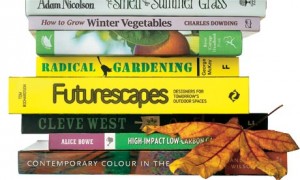
Salford's Prof George McKay's Book of the Year!

George's new book Radical Gardening is getting a host of mentions in end-of-year round-ups of best books (including The Guardian and The Independent, copied below).

All reviews via his blog.

Independent On Sunday
If you thought gardening was a tame and rather bourgeois pursuit, here is a book to make you think again. George McKay traces the ways in which gardening and the garden have been, and remain, central to radical politics, from the Hyde Park riots of the 1860s, through the social utopianism of the garden city movement, the progressive left-wing and reactionary right-wing versions of organic gardening, foreign plants and the politics of immigration, peace gardens, gay gardens, counter-cultural gardens of the 1960s, and up to the ‘guerrilla gardening’ on urban wasteland today. A fascinating and erudite history that made me want to go and cultivate my garden. (Brandon Robshaw, Books of the Year, ‘Vegetable plots, ad the red roots of a green revolution’, 11 December)


The Guardian
This unusual book looks at the role the garden plays in politics and revolution. George McKay is an academic who specialises in the study of counterculture, and he has turned his gaze on gardening. As well as the more obvious and leftwing, such as environmentalism and garden cities, McKay writes about the affinity the Nazis felt with organic movement. Uncomfortable in places, but hugely thought-provoking. (Lia Leendertz, Weekend magazine, ‘When the garden sleeps’ [Christmas books article], 10 December 2011)

Friday, 9 December 2011

MMP Grad Programme talks, Weds 14 Dec

Internal speaker: Dr Yu-Wei Lin


Technofeminism and Media Technologies
Following up my introductory talk on technofeminism last academic year, this talk will provide not only a more advanced view on technofeminism and other related theories around feminist technoscience studies, but also my own experience of adopting this analytical approach for the research on women in Free/Open Source Software communities and gendered participatory cultures in an age of media convergence.


External Speaker: Dr Andrew Burke

Andrew Burke is an Associate Professor in the Department of English at the University of Winnipeg where he teaches critical theory and cultural studies. His current project is on the representation of memory and modernity in contemporary British cinema.


The Sound of Straight-to-Video:

VHS Head’s Trademark Ribbons of Gold

Comprised primarily of samples drawn from a collection of 80s videocassettes layered over frenetic and fractured beats, the music of VHS Head points to the way in which memory and technology intersect. Occupying the space where glitchy electronica meets hypnogogic pop, the tracks on VHS Head’s debut album Trademark Ribbons of Gold trace a trajectory from the VCR to the mp3. The analogue remnants of the recent past are digitally reprocessed and reconfigured in a way that amplifies their force and menace. The work of VHS Head does not simply represent another example of the contemporary enthusiasm for dead media and obsolete technologies, but also serves as a model for how the recent past resides in the present day: as a discontinuous and disorienting barrage of fragments that continue to haunt and unsettle the present. Drawing on memory studies and thing theory, this paper examines the uncanny as it is embodied in the ungainly material form of the videocassette and let loose through the music of VHS Head.

followed by our Christmas Social!

Times for All Sessions:
3.10 – 4pm:     Internal Speaker
4.15 - 5.15:      External Speaker

Location:
All sessions: second floor lecture theatre, Adelphi House
Building 3 on page 3 of this map: http://www.salford.ac.uk/travel/campus-map.pdf
(NB: Not Adelphi Building, and beware of Google Maps that confuses the two).
If you need parking, please let Ben Halligan know ahead of time: b.halligan@salford.ac.uk

Seasonal Miriad Social and Networking event

Salford PGRs invited to MIRIAD’s networking event, which is taking place at The Salutation, on Thursday 15th December 2011. Directions here and http://www.salutationmanchester.co.uk/


Thursday, 8 December 2011

Believe@MediaCityUK

video here: a behind-the-scenes film of the Believe event, produced by University of Salford students. Andrea Marcaccio and Nikola Brunelli, Erasmus students on the MA Creative Technology course, have captured and packaged preparations being made in the Digital Performance Lab for last month's popular event. The Believe event was a huge success with nearly 3000 visitors attending as the university invited the public to come and see our new MediaCityUK home.

Sunday, 4 December 2011

MediaCity Christmas Party!!


 See the full line up and book your free ticket at http://mcukbigchristmasparty.eventbrite.co.uk/

Postgrad Enterprise

For the first time ever the University of Salford has collaborated with the University of Manchester and Manchester Metropolitan University to jointly host an event aimed at Postgraduates from all three Universities . The focus of the event will be on how to be entrepreneurial and/or intrapreneurial in your research, studies or whether you choose employment or self employment.

The event will be held on Monday 23rd January 2012 at Salford University, Media City.

During the course of the day, there will be keynote speakers, postgraduate and Alumni entrepreneurs as well as local entrepreneurs and business representatives.

This is a great opportunity to find out what is happening in the labour market, to network with peers from the University of Manchester and Manchester Metropolitan University and to gain some practical tips and advice on future career prospects.

Each University has been allocated 50 places, therefore it is imperative that people book early to avoid disappointment. Please find attached the promotional poster and full details can also be found on our website http://www.postgradenterprise.co.uk/

Thursday, 1 December 2011

Prof David Sanjek (1952-2011)

Many of you will have heard the terrible news that our dear friend and esteemed colleague Prof Dave Sanjek passed away a few days ago on the journey back from New York to Manchester, where he was engaged in expert committee work for the Library of Congress.


(Dave hosting the Tony Palmer masterclass in 2010)

This was so unexpected - in the last fews week he was about town, as usual, for films (The Black Power Mix Tape, which he found incredibly moving since the times and places were his own), for live music (The Fall, where he was more enthused by the rhythm section than the singer), for theatre (One Man, Two Guvnors, on which he and I agreed to differ!), for food (we were gradually winning him around to Zouk, but he held fast to Red Chilli too) and for general conversation (I picked his brains Friday gone on the subject of 1970s late night New York cable television screenings of horror films for a piece I was writing - he was, as always, encyclopedic and with an enthusiasm that swept you along as well). As you'll see from the picture further down this blog, he was hosting a Graduate Programme talk only a couple of weeks ago.

Recently completed chapters concerned Captain Beefheart, the Medicine Ball Caravan and Wildman Fisher, and recent conferences he convened included Sights and Sounds: Interrogating the Music Documentary, a Northern Soul event, and a symposium on music and copyright.

Dave's passing is a great loss to us and to the wider community, and to anyone who has ever enjoyed his company, his writing, his teaching, and his friendship.

--- Benjamin Halligan  


Facebook Memorial page here

Some of Dave's recent writing, on the films Johnny Guitar
and My Man Godfrey for Senses of Cinema.


Tuesday, 29 November 2011

Trauma Film Screenings in December

Trauma Film Screenings present: Capitalism in Cinema: A Brief History

Presented by Gözde Naiboğlu

This season will see the screening of three thrillers framing three different periods of capitalism experienced in three different settings: 1950’s in a South American vil...lage, 1920’s oil boom in California, and Hanover of former West Germany, present. What unites these three films is not their exploration of the savage virulence of capitalism according to the thriller genre conventions, but the questions that they provide us with: what sort of subjects does capital require and produce? What are the desires and beliefs that mobilize the (non)characters on screen and what symptoms of the capital-logic do these processes of desire production demonstrate? The season aims to delineate these symptoms by following the transformation of subjectivities throughout the transformation of labour. From the naturalist settings of the early to mid 20th century industrial capitalism to the eeriness of the post-industrial world of contemporary finance capitalism, the three films attempt to expose the in-human quality of capitalism’s operational logic.

Monday 5th December
Le Salaire de la Peur (1953)
Dir. Henri-Georges Clouzot
France
We (along with a long list of filmmakers) shall forever be thankful to the author of the novel “Le Salaire de la Peur”, Georges Arnaud for his arguably bigoted decision to give the rights to the film to a French filmmaker instead of Hitchcock. Set in an abject town in Venezuela, the film opens with an American oil firm boss’s offer to pay a big amount of money to whoever accepts to transport two trucks filled with highly explosive nitro-glycerine which will be used to extinguish a nearby oil-well fire. The slow paced, nightmarish journey is one of the most intense trips in the film history that is, in Karel Reisz’s words, “unselectively and impartially anti-everything”.

Monday 12th December
There Will Be Blood (2007)
Dir. Paul Thomas Anderson
USA
Set in early 1900’s California and loosely adapted from Upton Sinclair’s novel “Oil!”, There Will Be Blood is a dark dialectical account of capital and religion which touched a nerve for its relevance today. The main character of the film, the greedy oil pioneer Daniel Plainview, which won the actor Daniel Day Lewis an Academy Award for Best Actor in 2007 is one of the most fascinating characterizations of the archetypal “homo economicus” ever performed. Day-Lewis’s affect-free performance of Daniel Plainview is the focus of the introduction to the film - with its pure beastly quality it is a perfect exhibition of the pre-subjective and inhuman quality of capitalism.

Monday 19th December
Yella (2007)
Dir. Christian Petzold
Germany
The “Berlin School” director Christian Petzold’s Yella tells the story of a recently divorced young woman leaving her hometown in former East Germany to find a job and start anew in the World Expo 2000 host city Hanover in former West Germany. The whole film is about money, as the director explains in an interview there is not a single scene without money’s presence in it. Yet the strictly materialistic and mundane non-spaces of the post-industrial German town paradoxically exude an atmosphere of otherworldliness. The non-characters pass through these spaces and barely leave footprints behind, and are constantly chased by the ghosts of the past. Yella presents an almost clinical exploration of the operations of today’s finance capitalism.

All screenings are FREE and start at 6pm in Manchester Lecture Theatre, All Saints Building, Oxford Rd.


Follow us on Twitter: www.twitter.com/TraumaFilm
 

Monday, 28 November 2011

Salford Art and Design PGR session, 7/12

2.00 – 5.00 Wednesday 7 December 2011 in Room HT210, Centenary Building.

The topic is "Intellectual Property Rights and Research Ethics in Art and Design"

The session will be led by Professor Alex Williams and Dr Rob Partington.

Friday, 25 November 2011

Scottish Clarinet Quartet concernt

Sunday 27th November 2011 // 3:00pm // Admission: Free

Venue: University of Salford,

Digital Media and Performance

Lab, MediaCityUK,

With Matt Hulse

‘Songs of the Earth’ & The Parlour

Guide to Exo-Politics

In a rare trip ‘south of the border’ the Scottish Clarinet Quartet (SCQ) presents

‘Songs of the Earth’, in which composers including Stephen Davismoon, David

Fennessy, Sadie Harrison and Anna Meredith collaborated closely with

photographer Terry Williams to create an audiovisual synthesis: sound and image

together evoking the wild natural world of Skye.

The concert will also include SCQ’s latest commission, ‘The Parlour Guide to

Exo-Politics’, work produced by ‘Gameshow Outpatient’ and featuring

visuals from film maker and video artist Matt Hulse. This work has been made

possible through the support of Creative Scotland. www.scq.org.uk

Thursday, 24 November 2011

30/11 talks postponed

In anticipation of industrial action this coming Weds, the two talks scheduled for the Graduate Programme will be postponed until the new year.

The next talks will be on 14 December (followed by a Christmas social):

Internal session: Dr Yu-Wei Lin, "Technofeminism and Media Technologies"
External speaker: Dr Andrew Burke (University of Winnipeg), "The Sound of Straight-to-Video: VHS Head’s Trademark Ribbons of Gold"

I'll send out email reminders prior.

Thursday, 17 November 2011

MMP Grad Programme talks

Our many thanks to Dr Eithne Quinn for her fantastic talk on grime lyrics as legal evidence

(Salford's Prof David Sanjek introduces Dr Quinn)

Here's a link to Eithne's book on gangster rap.

Our next session (30/11) potentially clashes with industrial action across the public sector, in which case I'll reschedule our talks. Information to follow.

Wednesday, 9 November 2011

Grad Prog talks, 16/Nov

Internal session: Dr Benjamin Halligan
(3.10 - 4pm; second floor lecture theatre, Adelphi House)

Questions of Anti-Establishment Art

How is the history and ontology of the “English establishment” preserved and maintained in postmodern times? This presentation of current research examines Jarman’s 1992 painting “Queer”, the 2002 track “Time for Heroes” by The Libertines, and Mario Testino’s official wedding photograph of Kate Middleton and William Wales from 2011. To what extent do these three texts from the last two decades seek to subvert and/or renew notions of the establishment - its aesthetics, ideology, rituals and prejudices? In what ways is this establishment both called into creation, and called to account, in these three documents? And how does the radical or bohemian tradition of English modernist art fare in this context? The discussion will take as its starting point Stephen Frears’ gelding for the 2006 film The Queen.


External Speaker: Dr Eithne Quinn
(4.15 - 5.15; second floor lecture theatre, Adelphi House)

Dr Eithne Quinn of the University of Manchester is author of Nuthin’ But a “G” Thang: The Culture and Commerce of Gangsta Rap (Columbia University Press, 2005). She is currently completing a book entitled A Piece of the Action: Race and Labour in Post-Civil Rights Hollywood.


Taking the Rap: The Use of Violent Grime Lyrics in Criminal Cases
In three recent murder cases in London, prosecution counsels presented violent ‘grime’ rap lyrics written by defendants as evidence of guilt. As author of a scholarly book on gangsta rap, Eithne Quinn acted as an expert witness for the defence in the three trials. This paper gives an account of the legal use of violent rap and argues that, in these cases, lyrics should not be admissible as evidence.

The Future of Television Talk by Alex Connock

What kind of TV are you going to be working in for the next 40 years ? It's going to be global, interactive and online - and very different from the one we all grew up with. Visiting Professor Alex Connock, who co-founded the large factual TV production company Ten Alps, and has now founded Salford-based digital content company Pretend, tries to find some answers. Social media content, big-hitting interactive TV formats, more than ever from the North, and a TV business geared to sell programmes around the world will all feature, with loads of examples, and questions for the audience. Alex is also Chairman of the Royal Television Society in the North West, and a visiting fellow in journalism at Oxford University.


Monday 14 Nov, 5.15pm, Digital Performance Lab, MediaCityUK
Free to attend but please email d.hughes1@salford.ac.uk to let them know.

Thursday, 3 November 2011

Seven Sites project


Link to the Seven Sites project, which consists of 7 separate but inter-related performance events at various sites around Manchester, below. The project is being supported by the University and we have students involved gaining work experience. The next event is taking place on November 23rd.


Innovation through Heritage event

Innovation through Heritage: How do we maximise the use of heritage assets in businesses, the cultural sector and higher education?

Date: - Friday 11th November 2011; Time: - 12.00 noon until 4 p.m.

Location: University of Salford, The Old Fire Station, Acton Square, The Crescent, M5 4WT

Join us at this FREE seminar organised by University of Salford's Leisure, Heritage & Recreation Research Group, in conjunction with the International MNEMOS project – www.enterpriseculturalheritage.org, ISOS research group and UKAIS.

Cultural Heritage – How can it open new opportunities?

Kath Doran MD for Spectrum Plastics, a business which has been around since 1922. Kath will talk about learning through experience and the wealth of knowledge that has been passed down the generations. This heritage has helped the organisation to diversify, increase and widen marketopportunities and develop new products whilst maintaining the core values the business was originally built on. www.spectrumplastics.co.uk


Tools and Technology – Satisfying local needs online

Sarah Hartley Sarah will talk about the community engagement project, www.n0tice.com, which re-examines the idea of local news and information in the context of a SoLoMo (social-local-mobile) context to create a digital community noticeboard. She blogs about journalism, social media, local news and online communities and is also a regular writer at The Guardian's Northerner blog www.guardian.co.uk/uk/the-northerner


Stop Me If You Think You've Heard This One Before

Steven Flower will talk about how Salford Lads' Club utilises a chance connection with the 1980's band The Smiths to help preserve and continue it's 100 year legacy of providing services to young people and to continue to "Brighten Young Lives and Make Good Citizens" (its moto) using Social Media Surgeries, Digital library of fans on Flickr and much more…


Struggling To Get Your Voice Heard?

Maintaining quality in an age of quantity Lynette Cawthra was appointed Manager at the Working Class Movement Library in 2006 with a remit to 'explore, develop, and implement methods of presenting the resources of the Library in new, more exciting and accessible ways'. At a time of public expectation of ever-present access to digital information and yet also of severe funding cuts, how can this be achieved?


Programme:

12:00 Light lunch and informal networking

13:00 ”Pecha Kucha“ from researchers and practitioners in the Heritage area

14:00 Keynote speakers

15:50 Closing remarks


How to book?

If you would like to attend this free event, please complete an online booking form by visiting: http://ech.eventbrite.com
Places are limited please book early - before 7th November http://ech.eventbrite.com
Guests are invited to participate in this event by submitting a Pecha Kucha. See tips for presenters (www.isos.salford.ac.uk/pechakucha.php) and submit your slides by 1st November by emailing l.walker@salford.ac.uk and e.vasilieva@salford.ac.uk

Help us to promote this event by sharing the event leaflet with those who might be interested - download the Innovation Through Heritage event leaflet here.

For more information please contact us:

Liz Walker on 0161 295 2888 l.walker@salford.ac.uk
Elena Vasilieva on 0161 295 3510 e.vasilieva@salford.ac.uk

Colman / Deleuze talk

Our many thanks to Manchester Metropolitan University's Dr Felicity Colman (left) for her fantastic talk on Deleuze and cinema yesterday.

Here's a link to her recent book on the same.

New series of Invisible Histories talks

Talks at the Working Class Movement Library:

Wednesday 9 November 2pm Alison Gill and Helen Ostell 'Safety in numbers: life in Prestwich Asylum in 1900'.

Wednesday 16 November 2pm Tim Gee ‘Counterpower'.

Wednesday 30 November 2pm George McKay - ‘Radical Gardening'.

Friday, 28 October 2011

Salford Grad Programme talk 2/Nov: "How to use Deleuze in thinking about Screen Media"

2 November / 4.15 - 5.15 / 2nd floor lecture theatre, Adelphi House
External Speaker: Dr Felicity Colman

Dr Felicity Colman is a Reader in Screen Media in the Dept of Media at MMU. She is the author of Deleuze and Cinema (Berg 2011) and editor of Film, Theory and Philosophy (2009) and co-editor of Sensorium: Aesthetics, Art, Life (2007). She is working on a number of book projects that engage screen media forms, including Bergson and Film, and Screen Media Semiologies.


How to use Deleuze in thinking about Screen Media
Gilles Deleuze published two radical books on film: "Cinema 1: The Movement-Image" and "Cinema 2: The Time-Image". Engaging with a wide range of film styles, histories and theories, Deleuze’s writings treat film as a new form of philosophy. This cine-philosophy offers a startling new way of understanding the complexities of the moving image, its technical concerns and constraints as well as its psychological and political outcomes. In this talk I'll look at some of the key concepts behind Deleuze’s revolutionary theory of the cinema (affect, time, thought, politics, etc), and discuss how Deleuze’s radical methodology is useful for all forms of for screen media analysis.


Tuesday, 25 October 2011

Oberhausen Film Festival -- Call for Entries

58th International Short Film Festival Oberhausen, 26 April - 1 May 2012
Press release

Calling for entries for the 2012 competitions

The 58th International Short Film Festival Oberhausen is now calling for entries for its competitions. In 2012, a record 44,000 euros of prize money will be distributed.

The new Promotional Prize of the Festival is the main cause of the increase in prize money at Oberhausen. For this prize, the festival will donate 10 cents per admission. With an average of almost 18,000 admissions per year, Oberhausen is expecting to award a sum of around 1,800 euros. In addition, the prize money in the International Children's and Youth Film Competition has increased from 2,000 to 3,000 euros and the Zonta Prize for a female filmmaker in the International or German Competition was raised from 500 to 1,000 euros.

Oberhausen organises five competitions: International, German, North Rhine-Westphalian, International Children's and Youth Films and the MuVi Award for the best German Music Video. Entry forms and regulations are available as downloads from kurzfilmtage.de. The festival recommends submission via reelport.com, where films can be registered and uploaded online.


Deadlines:

- Submission deadline for international productions: 13 January 2012

(max. 35 minutes running time, produced after 1 January 2010)


- Submission deadline for German productions: 15 February 2012

(max. 45 minutes running time, produced after 1 January 2011)


- Submission deadline for the MuVi Award: 21 February 2012

(the director or production company must be located in Germany, produced after 1 January 2011)


Online:


Oberhausen, 25 October 2011
Press contact: Sabine Niewalda, T +49 (0)208 825-3073, niewalda@kurzfilmtage.de