Tuesday, 26 March 2013

Training for all CASS PGRs

Please don't forget to book yourself onto a training session if you're a PGR in the College of Arts and Social Sciences who is delivering teaching and you haven't already gone through the programme. (Emails have been sent out but check with the Research Support Unit if you're unsure).


Wednesday, 20 March 2013

Jodi Dean at Salford

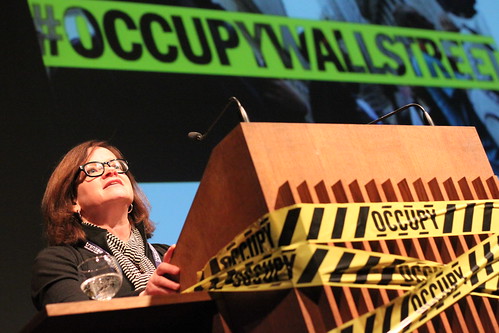
Our thanks to Jodi Dean for her fantastic talk... Communism as an unvanquished fear, creativity and the architecture of MediaCityUK, the reordering time in the Occupy movements,  feminist theorising of domestic subjectivities.

Jodi's new book, The Communist Horizon, available here

  (Jodi with Dr Michael Goddard)

Thursday, 14 March 2013

6 Million Ways of Getting into the Arts: Moving Image

Tuesday 19 March, 6-9pm

Venue: Alan Turing Room, Dock House, BBC, MediaCity UK, Salford, M50 2LH

In partnership with BBC North and Quays Culture, Castlefield Gallery are very pleased to present a range of expert speakers working in moving images, within broadcasting, contemporary art, and digital and media training.

How do you tell your story on television? Louise Blythe, Executive Producer at the BBC Academy, will provide an insight into the commissioning process and Karin Thayer, Multi-Media Trainer at the BBC College of Journalism, demonstrates good practice in the social media sphere.
Guest speakers are Rosalind Nashashibi, Northern Art Prize 2013 shortlisted artist and Karen Shannon, Arts Development Manager: New Media at Lets Go Global who will highlight some of the many diverse routes to developing careers in this expanding field.
So join us, be inspired by the talks and be ready to ask questions at the Q&A session.

FREE but booking is essential. Book at http://6millionwaysmovingimage-eorg.eventbrite.com/#
or call 0161 832 8034
More on:
Rosalind Nashashibi, artist
Rosalind Nashashibi was born in Croydon, South London and is based in Liverpool. She studied at Sheffield Hallam University and Glasgow School of Art, and currently teaches at Liverpool John Moores University. Her work is shown internationally and she has recently had solo exhibitions in Rome, Milan, Brussels, London, and Vancouver.  She represented Scotland at the 52nd Venice Biennale, and has shown in the 5th Berlin Biennial, Manifesta 7 and Sharjah 10. She won Beck’s Futures in 2003, the first woman to do so, and is shortlisted for this year’s Northern Art Prize. Much of her work consists of films at the borders of the everyday and the mythological.

Karen Shannon, Lets Go Global
Karen Shannon is the founder of Lets Go Global, a non-profit organisation based in MediaCityUK that exists to share skills in digital and creative technology. LGG combines art, education, film-making, digital development and training. Karen works with people to promote arts and digital culture, to influence new ideas, policies and partners to support the sector to encourage innovation, understanding, new audiences, and meaningful digital engagement with people.

—
For further information contact Jennifer Dean, Communications and Audience Development Coordinator at Castlefield Gallery on jennifer@castlefieldgallery.co.uk or on 0161 832 8034
—
Quays Culture is a new arts programme based out of the Quays/MediaCityUK and aims to attract local and international talent to Greater Manchester audiences. They work with artists that use innovation and creativity for live and digital interactions. The world-class location and partners support a collaborative programme of arts festivals, events, new art works, learning and new fun experiences for all to join in.


Castlefield Gallery would like to thank Programme partners including: BBC North, Eccles Gateway Centre, Islington Mill, IWM North (part of Imperial War Museums), The Lowry, MediaCityUK, the University of Salford, Salford City Council & Trafford Borough Council.

Tuesday, 12 March 2013

MMP Grad Prog: Jodi Dean - The Communist Horizon (20/3)


20th of March, 4pm-5pm, MediaCityUK (University of Salford building: Room 2.36)
(Non-Salford students: please meet 3.50 at reception and you'll be signed in).

Jodi Dean: The Communist Horizon

How is communism actual for us here and now? Jodi Dean considers how communism is the horizon of our contemporary politics in six ways: the past that remains present, the force of the ideal, the sovereignty of the people, the desire for the collective, the common and the commons, and the actuality of revolution.


Jodi Dean is a Professor of Political Science at Hobart and William Smith Colleges in Geneva, NY and Erasmus Professor of the Humanities in the Faculty of Philosophy at Erasmus University. She is the author or editor of eleven books, including Democracy and Other Neoliberal Fantasies (Duke 2009), Blog Theory (Polity 2010), and most recently The Communist Horizon (Verso 2012). Her work on communicative capitalism has been at the forefront of contemporary political and media theoretical debates with figures including Slavoj Zizek, Alain Badiou and Geert Lovink.


Changing Our Textual Mind

Adriaan van der Weel, the Professor of Book History at Leiden
University, will be visiting MMU to talk about his new book, Changing
Our Textual Minds, on Monday 18 March.

The book emerged from Adriaan's famous course on the History of Text
Transmission at Leiden University. His argument is important, timely
and completely fascinating.

Changing our Textual Minds analyses the continuities and
discontinuities in textual transmission as we move from a print
paradigm into an increasingly digital world. It conceptualises the
transition from analogue to digital both in factual terms and in terms
of its social significance. Our entire way of disseminating knowledge
and culture is firmly based on print culture. The need to come to
grips with the shift to digital textuality in the early twenty-first
century will literally change our minds. Text has always been the
chief vehicle for the inscription and dissemination of knowledge and
culture. As more and more of our textual communication moves into the
digital realm we have reached a crucial moment in the history of
textual transmission. In many respects digital text looks deceptively
like print. But beneath the surface of the screen, digital textuality
obeys very different rules from printed text. The digital textual
universe offers a wealth of new and exciting possibilities -- but it
also sets new rules for the writer's and reader's engagement with
text.

There will be a reception at 5:30pm, followed by a FREE public lecture
at 6:00pm. All are welcome.

Further details of the event are here:
http://www.hssr.mmu.ac.uk/2013/02/20/professor-adriaan-van-der-weel-leiden-university-changing-our-textual-minds/

To reserve your place, please email Helen Darby on h.darby@mmu.ac.uk
or follow this link: http://adriaanvanderweel-arp.eventbrite.com/#

Monday, 11 March 2013

MMU Artaud event

The Institute of Humanities and Social Science Research: Centre of Research in English at Manchester Metropolitan University present a one day symposium on ‘Antonin Artaud: Affects, Effects, Bodies’.
Wednesday 24th April 2013

Artaud’s influence on theory and practice in the arts is substantial. As a playwright, director actor, film scenarist, poet, artist and critic he challenged existing modes of working and thinking in ways that are still generating considerable interest and debate. His iconoclastic work, which brings the affective body and its creative potential to the fore, has shaped artistic experiment and new modes of critical thinking and writing and substantial critical studies of Artaud have been written by Derrida, Deleuze and others. Diagnosed as clinically schizophrenic, Artaud’s writings and drawings are also of considerable interest to psychologists and art therapists. The event should bring together research students, theorists and practitioners from fields both within and outside the academy.

The workshop will take place from 12.45pm-5.30pm in Geoffrey Manton room 332
This is a one day open-to-all workshop and we will seek to engage with an audience that spans academics, research students and the public.

12.45pm Welcome from Anna Powell
1pm Xavier Aldana Reyes (MMU): Artaud’s Theatre of Affect: From Cruelty to Horror
2pm Ros Murray (Manchester): Artaud on Paper
3pm break
3.30pm Anna Powell (MMU): Passional Bodies: Artaud’s graphics as interstitial force
4.30pm Jay Murphy (Aberdeen): The Artaud Effect
5.30pm close

Please register on Eventbrite here:  http://www.eventbrite.com/event/5737246258
Places are limited!

Salfordian Dining Experiences...


Tuesday, 5 March 2013

MMU Redux

CODE Creatives} [UPDATE] - The proposed two-day gathering has been streamlined to Audio:Visual:Motion [REDUX]  - a day of presentations, discussions, demonstrations, screenings and performance - and is now FREE to all.

///////////////////////////////////////////////////////////////////////////////////////////////////////////////

A {CODE Creatives} and MMU Digital Innovation Event
<image001.jpg>
[REDUX]

a day of presentations, discussions, demonstrations, screenings and performance
Friday 15th March 2013, 11am-6pm
Capitol Theatre, Manchester Metropolitan University, Mabel Tylecote Building, Cavendish Street, Manchester M15 6BG
FREE – book via Eventbrite - http://codecreatives.eventbrite.co.uk/

If you’re a postgraduate or early career researcher based in the North West (and possibly beyond) then your expenses to participate in this event may be covered by Designing Our Futures. All PGRs and ECRs interested in participating should also register here – http://dof.miriadonline.info/expressions-of-interest/).

///////////////////////////////////////////////////////////////////////////////////////////////////////////////

Programme

10.30-11am - Registration + Coffee
11-11.10am - Welcome + Introduction - John Hyatt + Lewis Sykes
11.10-11.30am - Screening - Simon Katan - Cube With Magic Ribbons (2012)
11.30am-1pm - Presentation - Charlie Gere, Alex McLean & Kate Sicchio - Viewpoints on the Digital/Analogue Relation
1-2pm - Lunch
2-3pm - Presentation - Mick Grierson - The Synthetic Audiovisual Contract
3-4pm - Demonstration - Paul Prudence - Deconstructing Cyclotone
4-4.30pm - Coffee
4.30-4.50pm - Screening - Larry Cuba - 3/78 (1978), Two Space (1979) and Calculated Movements (1985)
4.50-5.10pm - Performance - Mick Grierson - Delusions of Alien Control
5-10-5.30pm - Performance - Sicchio and McLean - Sound Choreography <> Body Code
5.30-5.50pm - Performance - Paul Prudence - Cyclotone
5.50-6.pm - Closing Remarks - Lewis Sykes

Details of the programme, including biographies of the Audio:Visual:Motion [REDUX] contributors and outlines of their various presentations and performances are now available via the {CODE Creatives} website.

PARC North West EVENT GENERATOR – 20 March

1.30pm – 5.00pm Wednesday 20 March

MIRIAD, Manchester Metropolitan University, Righton Building, Cavendish Street, Manchester M15 6BG

Building on the success of last year, PARC North West is holding another regional event to give PGRs, ECRs and their Supervisors the opportunity to generate a series of cross-institutional activities for this and next Academic Year.
This year the Event Generator could be used to develop submissions to the Creative Arts and Industries: Collaboration in Practice conference, 21-22 June 2013 (details attached). Closing date 25thMarch!).

At the same time we are looking for events for next academic year in November and March. If you have an event idea already, or would like to be involved in one, this is your opportunity to develop it with your peers. These ideas can be topic or disciplinary based, specific or broad in nature, PARC North West is here to support your events. 

The 'Event Generator' is a creative activity based on 'Open Space Technology' to generate ideas. All who participate will be able to develop their own ideas or join with others. Together we will then transform these ideas into one or more events in the coming months.  

Please email RSVP to MIRIAD@mmu.ac.uk, headed 'Event Generator’

You may wish to answer the call to Creative Arts and Industries: Collaboration in Practice conference, 21-22 June independent of the Event Generator

Tuesday, 26 February 2013

Grad Prog talks 6/3: Information Wars / The Aesthetics of Disappearance

-->
Wednesday 6 March:
Internal Speaker: Carole O’Reilly (University of Salford; Journalism division)
MediaCity, 3.10-4pm, Room 3.32.
‘Resistance is Victory’: Occupy Bilderberg, Journalism and the Information Wars
This paper examines the tactics of this small and tightly-focussed Occupy movement as they protest the annual meeting of the Bilderberg group and their subsequent attempts to influence the reporting of that event.
The Bilderberg group consists of an alliance of politicians, academics, bankers and economists. The group has been the focus of numerous conspiracy theories centring on the alleged establishment of a ‘new world order’ and a shadow world government.
Members of Occupy Bilderberg are comprised of individuals of very diverse and divergent political views but their main focus is to protest and disrupt the annual Bilderberg meeting and to gain mainstream media coverage. This study examines the strategies deployed by the group in 2011 and 2012 to publicise their activities through websites, livestreaming, Youtube and Twitter and their interactions with the mainstream media.
This paper demonstrates how this interaction can help us to understand the relationship between mainstream journalism and citizen journalism – many Occupy Bilderberg members define themselves and act as citizen journalists. While some writers have celebrated citizen journalism as a democratic liberation from the restrictions of an increasingly corporate mainstream journalism, this paper demonstrates that, in practice, the boundaries between the 2 have resulted in a fractious and confrontational relationship that has resulted in a new information war.

Guest Speaker: John Armitage (Northumbria University)
MediaCity, 4.10-5.00pm; Room 3.32.
The Aesthetics of Disappearance

Media theorists generally associate Paul Virilio with his conception of the “aesthetics of disappearance.” This illustrated lecture examines his contribution to the debates over contemporary aesthetics by considering one of his most powerful texts, The Aesthetics of Disappearance (2009). It explains the importance of the argument of this book to afford an entry point into it for uninitiated English-speaking readers. The lecture then surveys the ramifications of Virilio’s study for theorizing and practicing media in the present period.

The theme of the book is the development and modern-day condition of human perception in the world’s advanced cultures. Virilio’s text is therefore about how diverse ways of perceiving and coping with the realms of photography and technology, science, and cinema are appreciated and incorporated into postmodern culture.

Perhaps the principal claim of the text is its description of the aesthetics of disappearance as an “irresistible project and projection toward a technical beyond” (Virilio 2009: 103). Before presenting an explanation of what Virilio means when he employs concepts such as “aesthetics” or the “technical beyond,” it is vital to grasp how this assertion stems from The Aesthetics of Disappearance in its entirety. Consequently, the purpose of this lecture is to offer a foundation for an appreciation of what he means by defining the aesthetics of disappearance in this way.

John Armitage is Professor of Media Arts at Winchester School of Art, University of Southampton. He specializes in the cultural and media theory of Paul Virilio, the French contemporary philosopher and ‘critic of the art of technology’. Professor Armitage is the founder and co-editor, with Ryan Bishop and Douglas Kellner, of the Duke University Press journal Cultural Politics and the author or editor of seven books on Paul Virilio including, most recently, Virilio and the Media (Polity, 2012) and Virilio and Visual Culture (EUP, 2013).

‘Zombies’ to descend on MediaCityUK for TV preview

Organisers from the BBC’s new writing department Writersroom and the University of Salford are hoping the public will enter into the spirit of the occasion and come dressed as the undead for the screening of episode one of In the Flesh, a new BBC Three series starring new acting talent alongside famous names including The Royle Family’s Ricky Tomlinson and Kenneth Cranham (Shine on Harvey Moon and Hot Fuzz).

At the preview, being held at the University’s MediaCity Building on Thursday 7 March, the audience will also get the opportunity to quiz the show’s writer, Dominic Mitchell, and director Jonny Campbell, whose credits include Doctor Who, Ashes to Ashes and television film Eric & Ernie, along with Kate Rowland, Creative Director of New Writing at the BBC.

The event is the first in a series of MediaCity Masterclasses offering aspiring writers the chance to learn from BBC professionals working in genres including soap, sitcom, children’s TV, and television and audio drama.
Set in the fictional village of Roarton soon after thousands of the dead were reanimated in one night, In The Flesh is the story of teenage zombie Kieren Walker and his reintegration into the local community and the heart of his family. With its central themes of redemption, forgiveness, acceptance, denial and what it means to be alive or dead, In The Flesh is a complex look at what happens when families get a second chance at mending their past and working together towards an unpredictable future.

Jennifer Tuckett, University of Salford lecturer in Creative Writing and co-organiser of the Masterclass series, said: “It’s fantastic to build on our partnership with BBC Writersroom and we look forward to working closely with them to bring in some of the most exciting writers working for the BBC over the next few months.”

The MediaCity Masterclass In The Flesh screening and Q&A will take place at the Digital Performance Lab, University of Salford, MediaCityUK, Salford, M50 2HE on Thursday 7 March from 6.30-8.30pm. The masterclass is open to the public and admission is free – for further information and to book a place, visit http://www.bbc.co.uk/writersroom/opportunities/in-the-flesh-screening.

Sunday, 17 February 2013

Call for Papers: Early Career Researchers and PGRs


SYMPOSIUM FOR EARLY CAREER RESEARCHERS AND POSTGRADUATE STUDENTS:

Digital Transformers Symposium, Manchester Metropolitan University, Manchester, England, Thursday 23rd May 2013

The AHRC funded Digital Transformers Symposium (http://www.digitaltransformersnetwork.com) is a one day event aimed at postgraduate students and early career researchers in the Humanities on the methodological and conceptual approaches and techniques required for the study of digital data and digitally mediated environments. The event will combine presentations and workshops, giving participants hands on experience of new techniques for working with digital data and space for discussion about the methodological, conceptual and disciplinary challenges these emerging techniques and practices are generating.

Ways of understanding and analysing digital data and digitally mediated environments are varied and complex. The skills required are increasingly specialised and do not necessarily conform to any particular theoretical or epistemological perspective. At the same time, an expanding set of broadly applicable concepts, techniques and methods are emerging that can be used across, and tailored to, the needs of multiple disciplines in the Humanities. Examples include data visualisation techniques, text and data mining, and network analysis, and theories and concepts around the socio-cultural, socio-political and cognitive processes that affect the use and interpretation of digital data and digitally mediated environments.
Key symposium themes to be explored therefore include:
* Concepts and theories that inform the study of digital data and digitally mediated environments.
* The wider socio-political, philosophical and cultural concepts/issues surrounding these.
* Methodological approaches to the study of digital data and digitally mediated environments.
* Particular techniques and tools that can be used to study, analyse, and represent digital data and digitally mediated environments.

The symposium organisers invite papers from research students and early career researchers in the Humanities that explore these, and related, themes.

SUBMISSION INFORMATION
Abstracts (maximum 300 words) for 15 minute research and position papers related to the symposium themes are requested by the deadline of 28 February 2013 to digitaltransformersnetwork@gmail.com
Proposals for panels of 3-4 speakers are also welcome. A proposal should have three to four papers and should consist of a panel title and short framing text, and abstracts for all the papers with paper titles and authors. Proposals are requested by the deadline of 28 February 2013 to digitaltransformersnetwork@gmail.com
Notification of acceptance: 31 March 2013

A small amount of funding is available on a competitive basis to cover travel and subsistence costs for participants unable to source funding from elsewhere. Applications for funding will open in March 2013.
ORGANISERS AND FUNDERS
The Digital Transformers Symposium is funded by a Collaborative Skills Development training grant awarded by the AHRC. It is being co-organised by postgraduate students and early career researchers from Manchester Metropolitan University's Department of Information and Communications and the University of Sheffield's Information School.


Friday, 1 February 2013

MMU events

All welcome!

(You may need to copy and paste the URLs below directly into your browser to access the pages)

Seminar on the ethics of gang research (11th Feb):

Documentary on Italy screening (8th Feb):

Business School seminars on social care and Universities as enterprise models (7th Feb):

Manchester Centre for Regional History upcoming events:

Alzheimer's Culture seminar (4th Feb):

Wednesday, 30 January 2013

Cancelled: Secret City event 6/2

With apologies! We'll aim to have this run before the end of the academic year.


Thursday, 24 January 2013

UEA Postgrad Scholarships

The Faculty of Arts and Humanities holds an AHRC Block Grant Partnership, which provides a series of studentships in the Faculty, and these are supplemented by other studentships funded by the Faculty. In previous years, then, there have been around 30 such studentships on offer within the faculty.

Applicants applying to work in Film, Television and Media Studies (FTM) at UEA will compete for these studentships with applicants from other schools, but applicants to FTM have a strong track record of winning these studentships. For instance, in previously years, FTM has typically successfully secured funding for around 6-8 PhD students, or approximately half of its yearly intake.

For UK students, these awards cover both fees and maintenance and for EU residents awards are on a fees only basis.

If you are interested in applying for a PhD in Film, Television and Media Studies at UEA, please contact the School's Director of Postgraduate Research Su Holmes (susan.holmes@uea.ac.uk) who will help guide you through the process.

You may also wish to consult our list of staff and their research interests for guidance on possible supervisory expertise: http://www.uea.ac.uk/ftv/People

Those interested in MA applications should contact Peter Kramer, the Leader of Postgraduate Taught Programmes (p.kramer@uea.ac.uk) in the first instance.

The deadline for receipt of applications for those wishing to be considered for MA or PhD funding is 17 February 2013.

More information and details of how to apply can be found at: http://www.uea.ac.uk/futurestudents/uk/postgraduates/admissions/pgtadmissions (for MA applications) http://www.uea.ac.uk/futurestudents/uk/postgraduates/admissions/pgradmissions (for PhD applications)

Alternatively, please contact the UEA Humanities Graduate School: humgrad.school@uea.ac.uk<mailto:humgrad.school@uea.ac.uk>

North West Postgraduate Music Exchange Conference

North West Postgraduate Music Exchange Conference
Saturday 16 March 2013, 11.00-18.00
School of Music, Bangor University

The music departments of the Universities of Manchester, Birmingham and Bangor are starting an exchange conference for music postgraduates. This conference will be open not just to these three institutions, but to all postgraduates studying music in the Midlands, the North West of England and the North West of Wales.

The conference provides an opportunity for young researchers to present their work in a congenial and friendly environment. Additionally, it will allow students to meet their peers and staff from other institutions.

In 2013, the conference is hosted by Bangor University. It will take place on Saturday, 16 March, from 11.00 to 18.00. It will be possible to travel back and forth on the same day. To those staying overnight, the organisers can offer free tickets for a concert with the BBC NOW Orchestra (Friday, 15 March).

Call For Papers

We encourage submissions from students in their early stages of study to present their work in musicology, theory, performance, composition (if compositions are to be performed the composer must make their own arrangements for performers/ensembles) and any other aspect of musical research. Presentations will be no longer than 20 minutes, followed by discussion.

Proposals are to be submitted as attachments by email to Twila Bakker (mup00a@bangor.ac.uk). They should include the following information: paper title, authors name, institutional affiliation, email, audio-visual requirements and an abstract of up to 250 words.

Submissions must be received by Friday 8 February 2013. The chosen presenters will be notified on 15 February 2013.


Tuesday, 22 January 2013

Salford SPARC conference: call for proposals

All postgraduate researchers are invited to take part in the Salford Postgraduate Annual Research Conference (SPARC) 2013: Theory, Practice, Impact

The conference is taking place on the 5 and 6 June 2013, and the call for abstracts is now open. Please see http://www.salford.ac.uk/research/postgraduate-research/sparc for the full details.

SPARC is a forum for developing research, offering a space for postgraduate researchers from all disciplines to exchange ideas. Proposals for presentations are invited which address the contribution (or potential contribution) of the research in relation to any of the conference themes: theory, practice and impact.
The conference is open to postgraduate researchers at all stages of research, and is free for Salford students. There are several presentation formats to choose from, and it’s a great way of developing presentation skills, testing ideas with new audiences, getting feedback, and meeting researchers from other disciplines and universities. 
The deadline for 250-word abstracts is 5pm on Monday 11 March. Details of how to submit are on the conference website http://www.salford.ac.uk/research/postgraduate-research/sparc
If you have any queries, please contact us on sparc@salford.ac.uk

Critical Digital Humanities talk at MMU

PUBLIC LECTURE Monday 18th February 2013
Presented in the 'Digital Humanities' strand of the Institute of Humanities and Social Science Annual Research programme at Manchester Metropolitan University

Dr David Berry (University of Swansea):
'Critical Digital Humanities'
Digital Humanities have been criticised, perhaps unfairly, for being narrow and lacking cultural critique, most notably by Geert Lovink and Alan Liu. In this paper I want to look at the way in which digital humanities as a field of research can address these critiques. This ranges from the particular research agendas that have become prominent within digital humanities itself, and which are strongly related to prior research interests drawn (or not) from the humanities themselves, and to the new research agenda that is driven primarily in relation to big data, gamification, MOOCs, and the so-called “industrialised” digital humanities. Whilst digital humanities have created critical versions of archives, tools, platforms, etc. and have begun to explore approaches to the use of the computational, how should digital humanities respond to the issues raised by the computational in society, economics, politics, or culture. Does the call for "more hack, less yack", calling for digital humanists to "do" rather than "talk", imply a reluctance to engage critically, or can discussions informed by the hashtag #transformDH, for example, help us to develop a more critical digital humanities. In what ways can hacking and "building" be undertaken in a critical vein and how can these "critical" practices inform theoretical discussions of digital humanities?

David M. Berry is Associate Professor in Digital Media in the Department of Political and Cultural Studies at Swansea University and affiliated researcher at Institutt for Medier og Kommunikasjon (IMK), University of Oslo. He is author of Critical Theory and the Digital (2013), The Philosophy of Software: Code and Mediation in the Digital Age (2011), Copy, Rip Burn: The Politics of Copyleft and Open Source (2008), co-author of New Aesthetic, New Anxieties (2012), he is also editor of Understanding Digital Humanities (2012) and Life in Code and Software (2012). He tweets at @berrydm on Twitter. http://www.swan.ac.uk/staff/academic/artshumanities/berryd/

The lecture will be preceded by an informal reception in Geoffrey Manton Building atrium at 5.30pm.
Seminar in lecture theatre 5 at 6.00pm.
This event is free to attend and all are welcome, however registration on Eventbrite is required and for security, entry to the building for non-staff /students will be restricted to those listed as registered.
So, please do register at Eventbrite here:
http://davidberry-arp-es2003.eventbrite.com

If you have any questions, please contact ihssresearch@mmu.ac.uk

Graduate Teaching Scholarships at Salford

Salford PhD teaching scholarships for the coming acacdemic year --- applications invited!

Deadline 1 March

Full info here:
http://www.salford.ac.uk/study/postgraduate/fees-and-funding/gts


Friday, 18 January 2013

MMP Grad Prog talk: Productive Parasites

Wednesday 23 January:
Guest Speaker: Marie Thomspson (University of Newcastle)
Productive Parasites: Thinking of Noise as Affect
This paper seeks to provide a more nuanced explanation for noise that distinguishes itself from prevailing negative narratives, which define noise as unwanted, undesirable, or damaging sound. It will be shown that such definitions have left noise vulnerable to an aesthetic moralism, which works to construct noise as a ‘bad’ to silence’s ‘good’. In order to overcome some of the insufficiencies and impasses of subject-oriented and object-oriented definitions - noise as a judgement of sound or noise as a type of sound - this paper will characterise noise as an affect with effects. Noise-as-affect refuses stable associations with subjects or objects; it has an existence that is autonomous from and irreducible to its particular manifestations. Moreover, noise-as-affect does not pertain to an overarching division between ‘good’ and ‘bad’; there is nothing inherently ‘bad’ about noise; rather, its status as such is relational and contingent. Thus thinking of noise in terms of affect allows for noise’s capacity to not only diminish and destroy, but also enhance and create; it allows for, as the composer Henry Cowell labels it, ‘the Joys of Noise’. As a means of conclusion, this paper will consider the implications of an affective noise definition for an aesthetics of noise. 


Marie Thompson is a PhD candidate at Newcastle University, based in the International Centre for Music Studies. Her research considered the ethical and aesthetic implications of thinking about noise in relation to affect. She is the co-editor of the forthcoming collection Sound, Music, Affect: Theorising Sonic Experience (Continuum, 2013). Marie is also a musician. She plays solo as Tragic Cabaret, and as part of the groups Ghostly Porters, J.G. Bollard and Beauty Pageant

MediaCity, Third Floor, Space Two. 4.10-5pm. (Anyone needs to be signed in / can't find the room, please wait in reception for 4pm).

Drinks after, everyone welcome... hope to see you there!

Manchester Uni PGR scholarships

Postgraduate study in Drama at the University of Manchester

Drama at the University of Manchester has a number of AHRC and University of Manchester awards to support postgraduate study commencing September 2013.

Applicants must have an offer of a place on an appropriate programme before they can be considered for an award.

Deadline for applications to the programme: Friday 1 February 2013
Deadline for applications for funding: Friday 1 March 2013

MA Applied Theatre
MA Theatre and Performance
MA Screen Studies
PhD Drama

For more information about Manchester’s MA programmes go to:
http://www.alc.manchester.ac.uk/subjects/drama/postgraduatetaught/taught/

For more information about our Doctoral programmes go to:
http://www.alc.manchester.ac.uk/subjects/drama/postgraduateresearch/research/

For more information about funding to support Doctoral and Masters study at Manchester go to: http://www.alc.manchester.ac.uk/fees/postgraduate/

For general enquiries about postgraduate study in Drama at Manchester please email jenny.hughes@manchester.ac.uk

As Yet Impossible Presents: Daniel Glaser

As Yet Impossible Presents: Daniel Glaser   
Are we all interdisciplinary now?


Tuesday 29 January, 18:00 - 20:00
Digital Performance Lab 
University of Salford 
MediaCityUK
Salford Quays
M50 2HE 
FREE - Registration Required 
The rise of personal digital curation means that everyone can fill their cultural lives with snippets from a vast range of genres and sources. We are encouraged to express ourselves by difference. From ordering your morning coffee to your own unique mosaic of likes and retweets, identity is sampled from multiple streams.  
Research is similarly constructed from overlapping disciplines. Neuroscience was only invented as a word in the 1960s, denoting the combination of more classical scientific approaches to the nervous system. Yet it is already being combined with other fields such as computer science, psychology and even the arts to underpin contemporary studies of the brain. The cutting edge of malaria research combines genomics, informatics, epidemiology and paediatric intensive care.  
So what is the role of the expert in the modern construction of knowledge? How can authority and trust survive at the cutting edge? And is there still a role for the specialist critic and the niche funder?   
Dr Daniel Glaser is Head of Special Projects in public engagement at the Wellcome Trust. His team directs activities with young people, broadcast media and scientists' public engagement. His scientific background involves brain imaging of the visual system. In 2002 he was appointed 'Scientist in Residence' at London's Institute of Contemporary Arts (ICA) and in 2005 received a Cultural Leadership Award from the National Endowment for Science, Technology and the Arts (NESTA). He has presented a television series for the BBC and co-chairs the CafĂ© Scientifique at the Photographers' Gallery. 
Arrival drinks will be served from 6pm ahead of the presentation at 6.30pm, followed by a Q&A session, evening ends 8pm. 
Eventbrite - As Yet Impossible Presents: Daniel Glaser  

Institute of Humanities and Social Science Annual Research Programme at MMU

February dates:

4th February: Alzheimer’s Culture
Lucy Burke (MMU)

11th February: ‘What’s in it for us?’ Ethical Considerations in Gang Research
Hannah Smithson and Rob Ralphs (MMU)

18th February: Digital Humanities public lecture
David M. Berry (Swansea)

25th February: Derrida and Nancy: from Right to Philosophy
Joanna Hodge (MMU)

For more information and to register search ‘ARP’ on Eventbrite or see:


Research seminars take place on Mondays in Geoffrey Manton Lecture Theatre 5, starting at 6.00pm.

Each event will be preceded by an informal reception in Geoffrey Manton Building atrium at 5.30pm with refreshments provided.

These events are FREE to attend and open to all staff, students and the public.

If you have any questions, please email ihssresearch@mmu.ac.uk